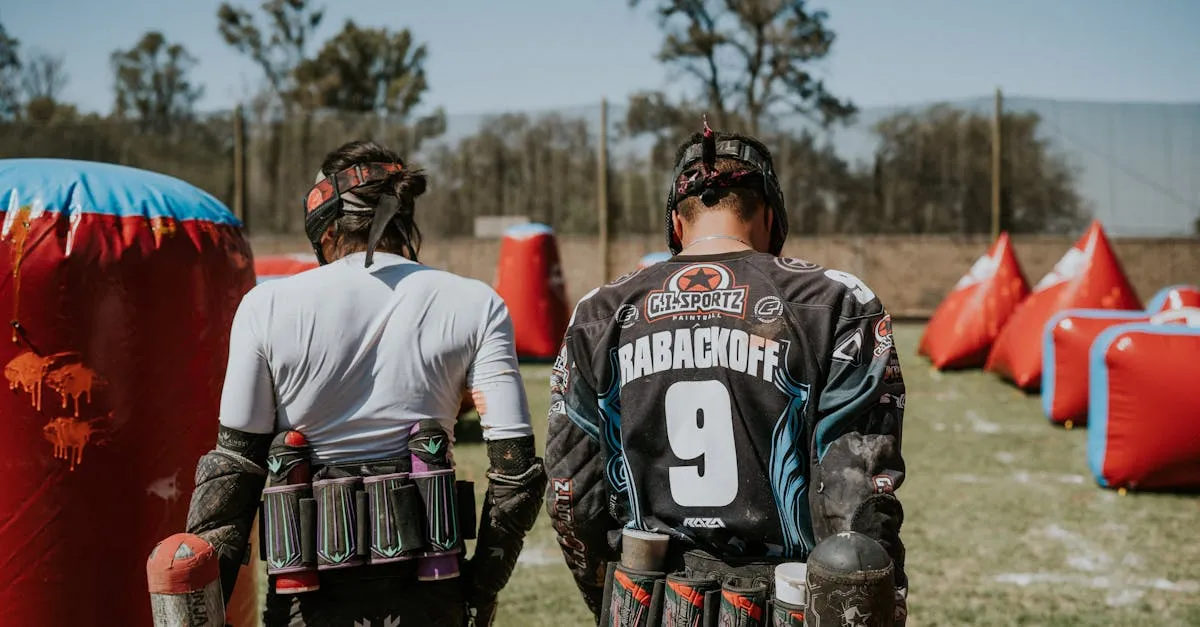
What is the best paintball setup for each budget? The best paintball setup depends on how much you want to spend. At $300, a Tippmann Cronus and HK Army HSTL mask get you on the field with reliable gear. At $500, the Planet Eclipse EMEK 100 and Virtue VIO Ascend deliver performance that rivals setups twice the price. At $1,000, the Planet Eclipse Etha 3, Dye i5, and Ninja SL2 carbon fiber tank form a tournament-ready package with nothing left to upgrade.
| Budget | Marker | Mask | Tank | Hopper | Total |
|---|---|---|---|---|---|
| $300 | Tippmann Cronus | HK Army HSTL | 48ci 3000 PSI HPA | Gravity hopper | ~$300 |
| $500 | Planet Eclipse EMEK 100 | Virtue VIO Ascend | First Strike Hero 2 | Gravity hopper | ~$500 |
| $1,000 | Planet Eclipse Etha 3 | Dye i5 | Ninja SL2 77/4500 | Virtue Spire IR2 | ~$1,025 |
Every tier includes a complete gear list so you can walk onto the field without borrowing or renting a single piece. If you are still figuring out how much paintball costs overall, start there for a full breakdown of paint, air, and field fees on top of gear.
Best Paintball Setup Under $300: Walk-On Ready
This tier covers the essentials. You get a reliable marker, a fog-free mask, an air source, and a way to feed paint. Nothing fancy, nothing fragile, nothing that will leave you frustrated on your first day.
Marker: Tippmann Cronus (~$150)
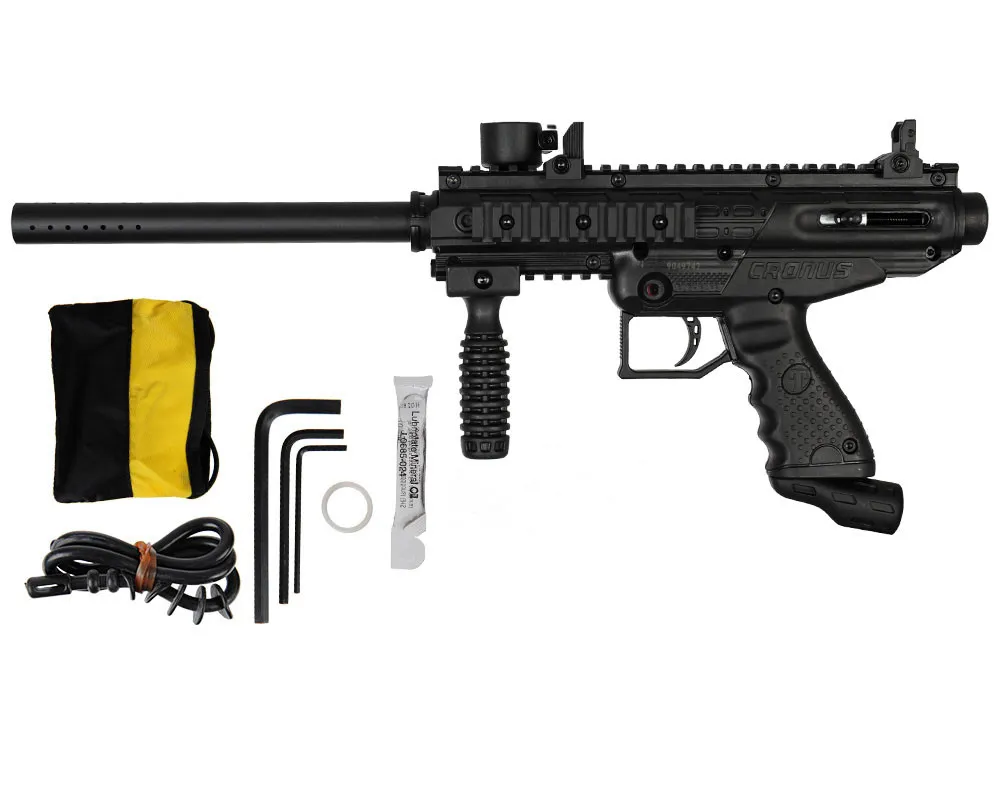
The Tippmann Cronus is the most popular entry-level marker in paintball for good reason. Its inline blowback bolt system is nearly indestructible, runs on either CO2 or HPA, and requires almost no maintenance. The Cronus feeds from any standard gravity hopper and accepts Tippmann’s full line of aftermarket barrels and accessories.
You will not get the smoothest shot or the quietest report. Blowback markers kick harder and run louder than spool-valve designs. But the Cronus fires every time you pull the trigger, survives drops and mud, and costs about $150. For a first marker, reliability matters more than refinement. Our guide to the best paintball guns for beginners explains why the Cronus consistently tops that list.
Mask: HK Army HSTL (~$55)
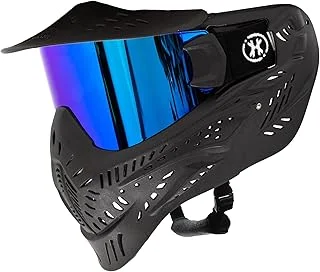
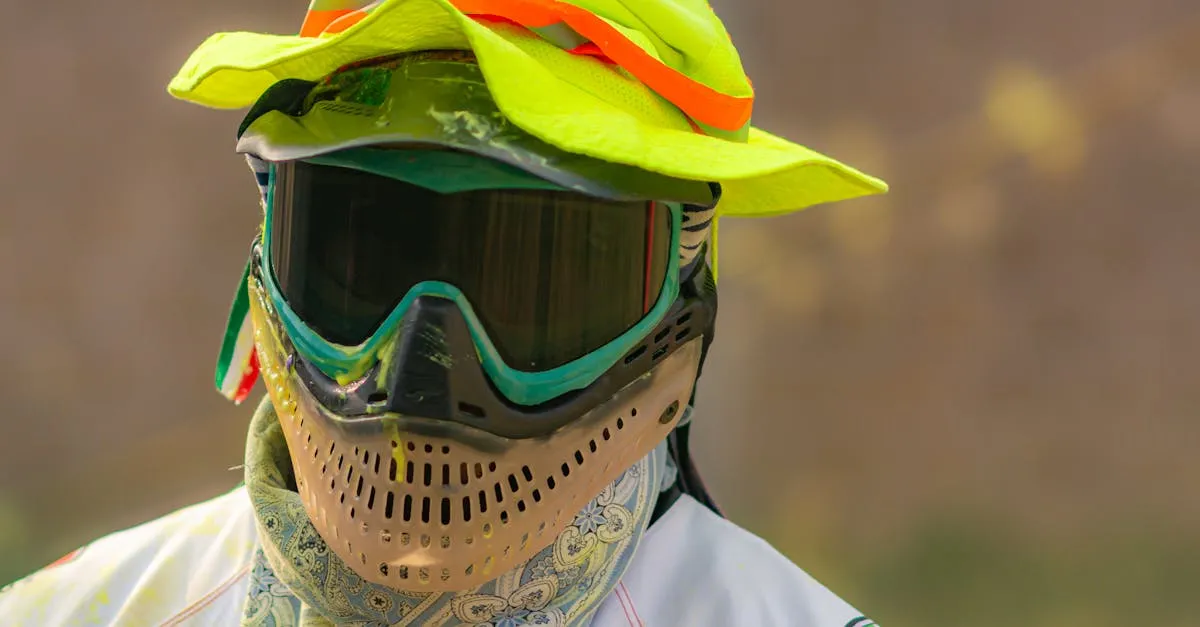
The HK Army HSTL is the least expensive mask on the market that ships with a dual-pane thermal lens. That thermal lens is the single most important feature in any mask because it prevents fogging. Single-pane lenses fog within minutes in cool or humid weather, and a fogged lens ruins your entire day faster than a broken marker.
The HSTL’s field of vision is adequate, the foam is comfortable enough for a few hours of play, and the strap holds securely. It is not the most breathable mask, and voice projection is average. But at $55 with a thermal lens, it dramatically outperforms every other option in this price range. Our best paintball masks roundup covers the full spectrum if you want to compare.
Tank: 48ci 3000 PSI Aluminum HPA (~$50)
No product card here because a basic aluminum HPA tank is a commodity item. Any 48ci 3000 PSI tank from a reputable brand will work. Expect roughly 500 to 700 shots per fill on a Cronus, which is enough for a few games before you need a refill at the field’s air station.
Why HPA instead of CO2? HPA delivers consistent pressure regardless of temperature, which means consistent velocity. CO2 fluctuates with heat and cold, causing accuracy swings and occasional liquid dumps that can damage o-rings. Our CO2 vs HPA comparison covers the full trade-off, but the short version is: spend the extra $15 to $20 for HPA from the start.
Hopper: Gravity Feed (~$10)
A basic gravity hopper holds 200 rounds, feeds by gravity alone, and costs under $10. It feeds fast enough for semi-auto mechanical play at 5 to 8 balls per second. You will occasionally need to shake it to clear a jam, but that is a minor inconvenience at this level.
What This Setup Gets You
A $300 setup puts you on equal footing with most walk-on players at any recreational field. The Cronus is rugged enough to survive rental-level abuse, the thermal mask keeps your vision clear, and HPA gives you consistent shots all day. You will not win a speedball tournament with this kit, but you will have a blast at woodsball, scenario events, and weekend open play.
Pros:
- Lowest total cost for a complete personal setup
- Extremely durable, low-maintenance gear
- Runs on CO2 or HPA for maximum field compatibility
Cons:
- Blowback kick and noise compared to higher tiers
- Gravity hopper limits rate of fire
- Small 48ci tank needs frequent refills
Best Paintball Setup Under $500: The Sweet Spot
This is the tier where your money works hardest. The jump from $300 to $500 buys a dramatically better shooting experience, a significantly more comfortable mask, and a tank that lasts longer between fills. Most experienced players consider this the best value in paintball.
Marker: Planet Eclipse EMEK 100 (~$316)
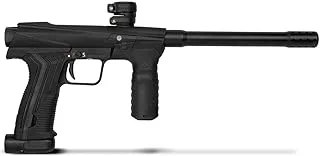
The EMEK 100 changed the conversation about mechanical markers. Planet Eclipse took the Gamma Core bolt system from their $1,000+ electronic lineup and built a mechanical platform around it. The result is a marker that shoots as smoothly as many electronics, handles paint gently enough to run tournament-grade brittle shells, and operates at roughly 135 PSI for excellent air efficiency.
The Gamma Core has no springs in the drive train. That means consistent velocity, minimal kick, and almost nothing that wears out. Players routinely go entire seasons without replacing a single part. No batteries, no circuit board, no eyes to troubleshoot. The EMEK simply works.
At around $316, the EMEK costs more than twice what the Cronus does. The difference in shooting experience is even larger than that price gap suggests. If you can stretch to this tier, do it. Our comparison of the best paintball guns under $300 and under $500 explains where the EMEK sits in the broader market.
Mask: Virtue VIO Ascend (~$85)
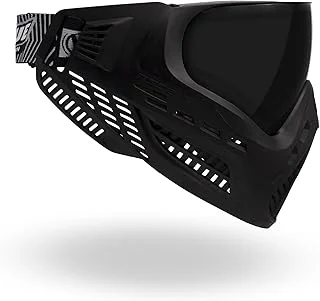
The Virtue VIO Ascend is the best mid-range mask in paintball. Its dual-pane thermal lens provides strong fog resistance, the foam padding is plush and comfortable for full-day sessions, and the click-lock lens retention system makes swaps straightforward. Field of vision is wide with minimal distortion at the edges.
Stepping up from the HSTL to the VIO Ascend buys you noticeably better breathability, improved voice projection, and a more secure fit. For $30 more than the HSTL, the comfort difference over a five-hour day is significant.
Tank: First Strike Hero 2 (~$70)
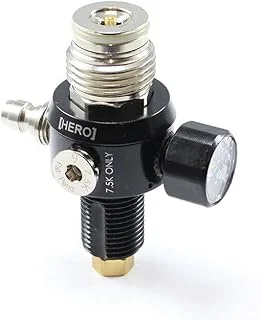
The First Strike Hero 2 is a 68ci 4500 PSI carbon fiber tank at a price that undercuts most competitors by $40 to $60. A 4500 PSI tank holds roughly 50% more air than a 3000 PSI tank of the same volume. Paired with the EMEK’s efficient Gamma Core, expect 1,000+ shots per fill, enough for most full days without a refill.
The Hero 2 weighs less than a comparable aluminum tank and comes with a quality regulator. It is the best value in carbon fiber tanks right now. Our best paintball tanks guide covers the full range of options.
Hopper: Gravity Feed (~$10)
The EMEK is a mechanical marker capped at roughly 8 balls per second. A gravity hopper keeps up with that rate just fine. There is no reason to spend $100+ on an electronic loader at this tier. Save that money for paint.
What This Setup Gets You
A $500 setup puts you shoulder to shoulder with players running $800 to $1,000 electronic rigs in terms of accuracy and reliability. The EMEK’s Gamma Core shoots smoother than most entry-level electronics, the VIO Ascend keeps your face comfortable and fog-free all day, and the carbon fiber tank lasts from morning to afternoon without a fill.
This is the setup we recommend for anyone who has played a few times, knows they enjoy paintball, and wants gear that will last for years. For a full first-time paintball tips rundown including what to bring beyond the marker, check our beginner guide.
Pros:
- Gamma Core bolt rivals electronic smoothness
- Zero maintenance, zero batteries, zero electronics to troubleshoot
- Carbon fiber tank lasts all day
- Excellent resale value on both the EMEK and VIO Ascend
Cons:
- Mechanical-only, no electronic firing modes
- Gravity hopper still limits rate of fire ceiling
- No room in budget for protective gear or pack
Best Paintball Setup Under $1,000: Tournament Ready
At this tier, every piece of gear is best-in-class for its price. You get an electronic marker with ramping and full-auto modes, the best mask in paintball, a premium carbon fiber tank, a force-feed loader that eliminates jams, and a harness to carry extra pods. This setup is ready for tournament play, scenario events, or simply dominating walk-on days.
Marker: Planet Eclipse Etha 3 (~$430)
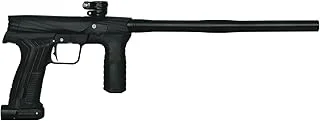
The Planet Eclipse Etha 3 is the best electronic marker under $500 and one of the best values in competitive paintball. It runs a refined version of the same Gamma Core bolt system found in the EMEK, paired with an electronic trigger frame that unlocks ramping, burst, and full-auto firing modes. The OLED display lets you tune settings on the fly, and break-beam eyes prevent ball chops.
The Etha 3 operates at low pressure for gentle paint handling and exceptional air efficiency. Build quality is rugged, with a polymer body that absorbs impacts without cracking. It feels lighter in your hands than most aluminum-bodied markers in the same price range.
If you are curious about the differences between electronic and mechanical markers, the Etha 3 demonstrates exactly what electronics add: higher rate of fire, multiple firing modes, and anti-chop protection. For a deeper look at this price tier, see our best paintball guns under $500 guide.
Mask: Dye i5 (~$210)
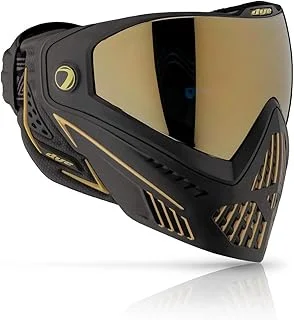
The Dye i5 is the best paintball mask on the market, full stop. The e.VOKE two-stage lens change system lets you swap lenses in seconds without tools. The dual-pane thermal lens handles fog in every climate, from humid Florida mornings to cold Midwest winters. The GSR Pro Strap distributes pressure evenly, and multi-directional venting channels air across the lens and out through the chin and forehead.
Comfort over a full tournament day is where the i5 separates itself. You forget you are wearing it. Breathability is excellent, voice projection to teammates is clear, and the field of vision is wide enough that you rarely feel restricted. At $210, it costs four times what the HSTL does. The difference is worth every dollar if you play regularly.
Tank: Ninja SL2 77ci 4500 PSI (~$185)
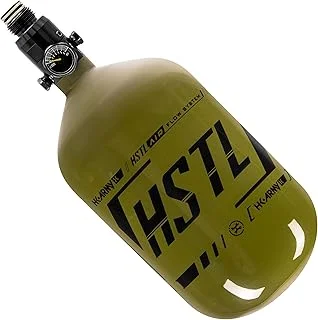
The Ninja SL2 is the gold standard in paintball air systems. The 77ci volume at 4500 PSI gives you more air than any other commonly used tank size, translating to 1,200+ shots per fill on an efficient electronic marker like the Etha 3. The SL2 is built with a carbon fiber shell that keeps weight remarkably low, and the Pro V2 regulator is one of the most consistent on the market.
At $185, this is not the cheapest carbon fiber option. But the Ninja SL2’s combination of capacity, weight, and regulator quality makes it the tournament player’s default choice. It will outlast multiple markers over its hydro life.
Hopper: Virtue Spire IR2 (~$125)
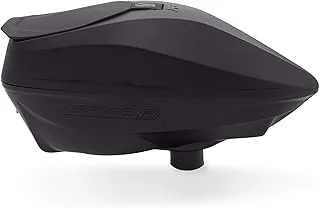
The Virtue Spire IR2 is a force-feed electronic loader that feeds paint as fast as your marker can shoot it. The IR2 uses infrared sensors to detect when the stack drops and spins the drive cone to push the next ball into the breech instantly. Feed speed exceeds 30 balls per second, which is faster than any marker’s practical rate of fire.
With an electronic marker like the Etha 3, a force-feed loader is not optional. Gravity hoppers cannot keep up with ramping or full-auto fire rates. The Spire IR2 eliminates feed-related breaks and jams, which means you spend time shooting instead of clearing your breech. For the full rundown on loader options, see our best paintball hoppers guide.
Harness: HK Army Zero-G (~$75)
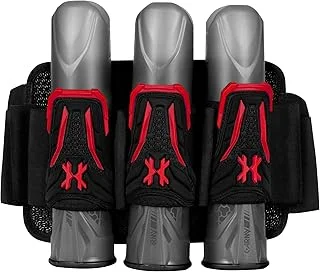
A harness carries extra pods of paint on your back and hips so you can reload during a game without walking back to staging. The HK Army Zero-G is lightweight, holds 3 to 5 pods depending on configuration, and uses a slim profile that does not snag on bunkers.
At this budget tier, carrying extra paint is the difference between running dry mid-game and staying in the fight. A harness with 4 pods plus your hopper gives you roughly 800 rounds of capacity, enough for most tournament points or extended scenario battles.
What This Setup Gets You
A $1,000 setup leaves almost nothing on the table. The Etha 3 competes with markers costing twice as much. The Dye i5 is the best mask at any price. The Ninja SL2 gives you the most air in the lightest package. The Spire IR2 feeds paint faster than you can shoot it. And the Zero-G harness keeps you supplied.
This is a setup you can take to a tournament and compete without any gear disadvantage. It is also a setup that will last for years with minimal maintenance. Every component here has strong resale value if you eventually upgrade individual pieces.
If you want to round out this kit further, our paintball checklist covers the smaller items like barrel swabs, Allen keys, and pod packs that complete a tournament bag. For protective gear recommendations, see what to wear to play paintball.
Pros:
- Electronic firing modes with ramping and full-auto
- Best-in-class mask, tank, and loader
- Tournament-legal and competitive at any level
- Strong resale value across every component
Cons:
- $1,000+ total investment
- Electronic marker requires batteries and occasional board maintenance
- Hopper adds weight and bulk compared to gravity feed
What to Buy First: Upgrade Priority Order
If you cannot buy everything at once, prioritize in this order:
Mask. A thermal lens is the single biggest quality-of-life improvement in paintball. Buy the best mask you can afford before spending extra on your marker. A fogged lens makes a $1,000 marker useless.
Marker. This is your primary tool. The jump from a blowback Cronus to a Gamma Core EMEK is the largest performance leap per dollar in paintball gear.
Tank. Moving from a small aluminum 3000 PSI tank to a carbon fiber 4500 PSI tank means fewer trips to the air station and more consistent output pressure. It also reduces weight on your marker.
Hopper. Only upgrade to a force-feed loader when you move to an electronic marker. A gravity hopper is perfectly adequate for any mechanical setup.
Harness and extras. A pod harness, barrel kit, and protective gear are nice to have, but they do not change your on-field performance the way the first four items do.
Start with the $300 tier and upgrade one piece at a time as your budget allows. Each component listed above is individually compatible across all three tiers, so you can mix and match as you climb. The mask you buy today works with the marker you buy next year.