Paintball Glossary: Every Term You Need to Know
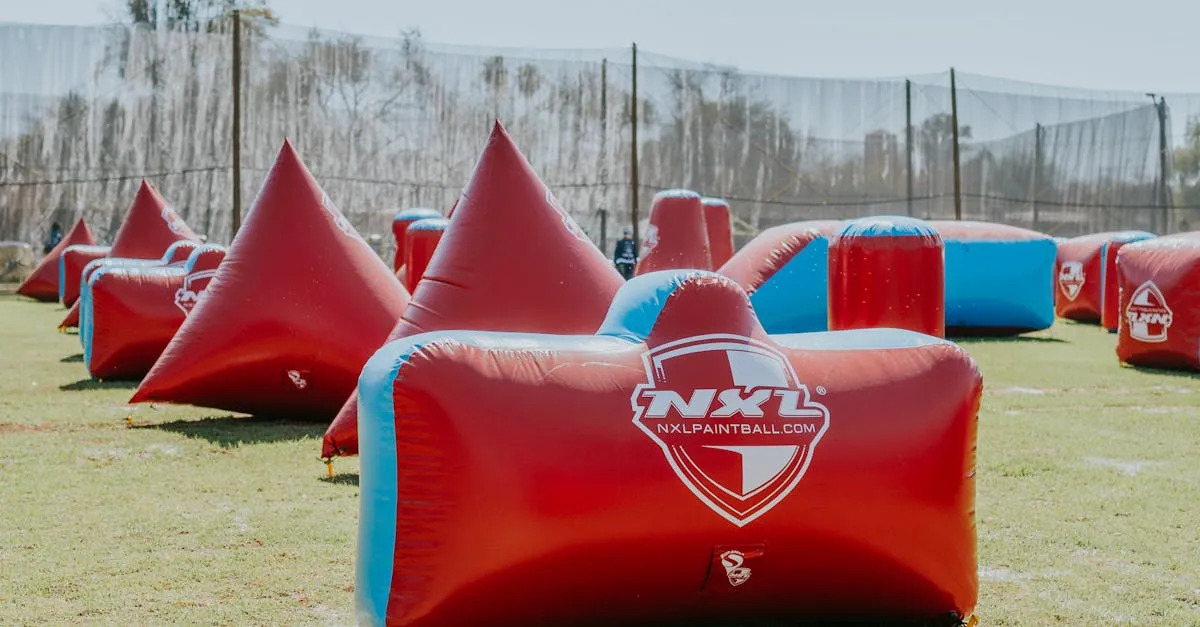
What does all the paintball jargon mean? Paintball has its own vocabulary covering markers, bolt systems, game formats, field callouts, and gear components. The glossary below defines every major term you will encounter on the field, in the pro shop, and in online forums. Marker and Gun Terms Marker: the official term for a paintball gun. The industry adopted “marker” because paintball guns were originally used to mark trees and livestock. Bolt: the internal component that loads a paintball from the breech into the barrel and seals the chamber before firing. Bolt design is the single biggest factor in a marker’s efficiency and smoothness. Breach (breech): the chamber where the paintball sits before being fired. Located between the feed neck and the barrel. Bore: the inside diameter of the barrel. Matching your bore size to your paint size improves accuracy and air efficiency. See our guide to the best paintball barrels for sizing details. Feed neck: the opening on top of the marker where the hopper attaches. Clamping feed necks give a tighter, more secure fit than standard friction-fit necks. Regulator (reg): a device that reduces high-pressure air from the tank to the lower operating pressure the marker needs. Most electronic markers have built-in regulators. Solenoid: the electronic valve in an electronic marker that controls air flow to the bolt. When you pull the trigger on an electronic gun, the circuit board activates the solenoid, which directs air to cycle the bolt. Learn more about the differences in our breakdown of the three types of paintball guns. ASA (Air Source Adapter): the threaded fitting at the bottom of the grip where the air tank screws in. On/off ASAs let you disconnect the tank without bleeding all the air out. Detent: a small rubber nub or spring-loaded ball inside the breech that prevents paintballs from rolling out the barrel before firing. Eyes: infrared sensors inside the breech that detect whether a paintball is fully loaded. Eyes prevent the bolt from firing on a partially loaded ball, which reduces chopping. Chop: when a paintball breaks inside the marker, usually because the bolt closed on a ball that was not fully seated. Markers with eye systems rarely chop. Blowback: a mechanical operating system where the bolt is driven forward by a spring and pushed back by excess gas from firing. Tippmann and Spyder markers use blowback designs. Simple and reliable, but rougher on paint. Spool valve: a bolt system where a single moving part handles both the bolt and valve functions. Spool valves are smooth and quiet but use more air. The Planet Eclipse Geo series and Dye M3+ use spool valves. Poppet valve: a bolt system that uses a separate valve and bolt. More air-efficient than spool valves but slightly louder. The Planet Eclipse CS3 uses a poppet design. Gamma Core: Planet Eclipse’s proprietary bolt system found in the Emek, ETHA 2, and higher-end markers. Known for extreme reliability with almost zero maintenance. Dwell: on electronic markers, the amount of time (in milliseconds) that air flows to the bolt during each shot. Adjusting dwell tunes the balance between velocity and air efficiency. ROF (Rate of Fire): how many paintballs a marker fires per second. Tournament caps are typically 10.2 to 12.5 bps depending on the league. BPS (Balls Per Second): same as ROF. Used interchangeably. Ramping: a firing mode where holding the trigger at a certain speed causes the marker to automatically ramp up to a capped rate of fire. NXL mode and PSP ramping are common tournament settings. Learn about competitive formats in our guide to professional paintball leagues. Degas: to remove all air pressure from a marker by unscrewing the tank and dry-firing until no gas remains. Always degas before disassembly. Our marker cleaning guide walks through the full process. Air System Terms HPA (High-Pressure Air): compressed atmospheric air stored in a tank at 3000 or 4500 psi. HPA is more consistent than CO2 and gentler on marker internals. Read our full breakdown of CO2 vs HPA for a head-to-head comparison. CO2 (Carbon Dioxide): a liquid gas stored in smaller, cheaper tanks. CO2 is affected by temperature, which causes velocity fluctuations. Still common for rental and recreational play. Tank output pressure: the pressure the tank’s regulator delivers to the marker. Standard output is around 800 psi for most HPA tanks. Hydro date: the date stamped on an HPA tank indicating when it was last hydrostatic-tested. Tanks must be re-tested every 3 to 5 years depending on the type. Fields will not fill an out-of-date tank. Fill station: the compressor or cascade system at a field used to refill HPA tanks. Walk-on fields include fills in the entry fee. Dive shops and some sporting goods stores also fill tanks. Remote line: a coiled hose that connects the tank to the marker, allowing you to carry the tank on a harness or vest instead of screwed into the marker. Common in magfed and scenario play. Hopper and Feed Terms Hopper (loader): the container that sits on top of the marker and feeds paintballs into the breech. Gravity hoppers rely on weight alone. Force-fed hoppers use motors or spring tension to push paint faster. Our roundup of the best paintball hoppers covers both types. Force-fed: a hopper that actively pushes paintballs into the feed neck using a motorized paddle or conveyor system. Required for electronic markers shooting above 8 bps. Gravity-fed: a basic hopper with no motor. Paintballs fall into the breech by gravity. Reliable for mechanical markers but too slow for high rates of fire. Speed feed: a lid replacement for a hopper that uses flexible rubber fingers instead of a solid cap. Lets you pour pods of paint in without opening a lid. Pod: a tubular plastic container that holds about 140 paintballs. Players carry pods in a harness and use them to reload their hopper during games. Check out the best pods and harnesses for current options. Harness (pack): a belt or vest worn around the waist that holds pods. Harnesses come in sizes based on how many pods they carry, typically 3 to 6 for speedball and more for scenario games. Paintball (Ammo) Terms Paint: shorthand for paintballs. “Good paint” means round, consistent paintballs that break on impact. “Bad paint” means dimpled, oblong, or overly hard balls that bounce or chop. Bore match: the practice of matching paintball diameter to barrel bore diameter. A ball that barely rolls through the barrel when you blow on it is well-matched. Too loose wastes air. Too tight causes barrel breaks. Shell: the outer gelatin layer of a paintball. Thinner shells break more easily on impact (good for tournaments) but are more fragile in hoppers (bad for rough handling). Our article on how paintballs are made explains the manufacturing process. Fill: the liquid inside a paintball. Higher-quality fill is thicker and more brightly colored, leaving a clearer mark. Budget paint has thinner, more translucent fill. First strike rounds: fin-stabilized, shaped paintballs made by Tiberius Arms. They fly straighter and farther than standard rounds but cost significantly more and require a compatible barrel. Popular in magfed paintball. .68 cal: the standard paintball caliber used in nearly all recreational and competitive play. The ball diameter is roughly 0.68 inches. .50 cal: a smaller paintball format that stings less and costs less per ball, but is not compatible with standard .68 cal markers. Read our comparison of .50 cal vs .68 cal paintballs for a full breakdown. Gear and Protective Equipment Mask (goggle system): the single most important piece of paintball equipment. Covers the eyes, ears, and face. Must be ASTM-rated and never removed on the field. See our picks for the best paintball masks. Thermal lens: a dual-pane lens with an air gap between layers that resists fogging, similar to double-pane windows. Standard on mid-range and premium masks. Barrel sock (barrel cover): a fabric pouch that covers the muzzle of the marker when not on the field. Required in all staging areas to prevent accidental discharge. Some fields also accept barrel plugs, but socks are the standard. Squeegee (barrel swab): a flexible stick or pull-through cloth used to clean paint out of the barrel after a break. Most players carry one in their pocket during games. Neck protector: a padded collar or wrap that protects the throat and neck from direct hits. Not required but popular with players who have taken a close-range neck shot. Slide shorts: padded compression shorts with hip and thigh padding. Common in speedball where players dive and slide on turf. Cleats: shoes with molded or rubber studs for traction on grass and turf fields. Speedball players typically wear soccer or football cleats. Our guide to the best shoes for paintball covers the options. Game Type and Format Terms Speedball: a fast-paced format played on a small, flat field with inflatable bunkers arranged symmetrically. Games last 2 to 5 minutes. See our full guide on how to play speedball. Woodsball: paintball played on natural terrain with trees, hills, and natural cover. Games are longer, teams are larger, and stealth matters more than snap-shooting speed. Check out how to play woodsball. Rec ball (recreational): casual paintball at a commercial field, usually with a mix of rental players and regulars. No formal rules beyond basic safety. Magfed (magazine-fed): a style of play using markers that feed from detachable magazines instead of hoppers. Limited ammo creates a more tactical, milsim-style experience. Read our complete magfed guide for details. Scenario game: a large-scale event with storylines, objectives, missions, and often hundreds of players over one or two days. Our guide to paintball scenario games covers the biggest events and what to expect. MilSim (Military Simulation): scenario play that emphasizes military tactics, realistic-looking gear, and chain-of-command structure. Overlaps heavily with magfed play. Elimination: the most basic game mode. Two teams start at opposite ends and try to eliminate all players on the other side. A player is eliminated when a paintball breaks and leaves a mark on them or their equipment. Capture the flag: each team has a flag at their base. Objective is to grab the enemy flag and bring it back to your base. Our guide to types of paintball games covers this and other game modes. Field Callouts and Positions Bunker: any object on the field used for cover. In speedball, bunkers are inflatable shapes. In woodsball, bunkers are trees, structures, barrels, or anything else you can hide behind. Snake: a long, low bunker or series of connected bunkers along one side of a speedball field. Playing the snake requires crawling and staying low. One of the most aggressive positions on the field. Dorito (Doritos): triangular, pyramid-shaped inflatable bunkers, usually arranged in a line on the opposite side of the field from the snake. Named for their resemblance to the chip. 50 (Fifty, center fifty): the center bunker on a speedball field. Controlling the fifty gives you angles on both sides of the field and puts pressure on the other team. Home (dead box, staging): the area behind a team’s starting position where eliminated players go. Once you are out, you walk to the dead box with your marker up and your hand raised. Tape (tape line): the boundary lines along the edges of the field. Playing “tight to tape” means hugging the sideline to get narrow angles on opponents. Lane: a shooting line from one position to another. “Laning” is the practice of shooting a stream of paint at a specific gap or bunker off the break to catch opposing players running to their positions. Break (breakout): the opening seconds of a game when both teams leave their starting positions and sprint to their bunkers. The break is the most chaotic and important phase. For more on positions and roles, see our guide on paintball positions. Snap-shooting: popping out from behind a bunker, taking one or two quick shots, and snapping back behind cover. Good snap-shooting is the single most important speedball skill. Bunkering: running up to an opponent’s bunker and shooting them at close range. Aggressive and high-risk. Some fields require a “surrender” call at close range instead. Crossfire: when two or more teammates shoot at the same opponent from different angles, making it nearly impossible for the target to hide. Posting up: holding a position and maintaining lanes of fire rather than advancing. Back players post up to provide cover for front players. Wrap (wrapping): moving far enough around a bunker that you can shoot around the side your opponent is not defending. A successful wrap usually leads to an easy elimination. Bump (bumping up): advancing from one bunker to the next closer one, usually while teammates provide cover fire. See our guide on paintball strategy and tactics for more on movement and team play. Safety Terms Chronograph (chrono): a device that measures the velocity of a paintball as it exits the barrel, usually in feet per second (fps). Fields require all markers to chrono at or below 280 to 300 fps before play. FPS (feet per second): the unit used to measure paintball velocity. The industry standard maximum is 300 fps, though many fields cap at 280 fps for safety. Learn more about paintball safety rules. Barrel sock on: a command given in staging areas and dead zones meaning your barrel sock must be in place at all times. Violating this rule can get you ejected from a field. Blind man: a safety call that stops all play immediately. Used when someone loses their mask, is injured, or a non-player enters the field. When you hear “blind man,” stop shooting and do not move until the ref clears play. Surrender rule: a field-specific rule requiring players to offer a surrender at close range (usually 10 to 15 feet) instead of shooting. Not used in tournament play. Check the rules of paintball for more on common field rules. Bonus ball: shooting a player who is already marked out. Considered poor sportsmanship and penalized in tournaments. Wiping: secretly rubbing off a hit to avoid being called out. Wiping is cheating and results in penalties in competitive play, often a multi-point suspension. Tournament Terms NXL (National Xball League): the premier professional and amateur paintball league in the United States. Runs events across the country with divisions from D5 (beginner) to professional. See our guide to professional paintball leagues for the full breakdown. Race-to format: a match structure where the first team to win a set number of points wins. NXL pro matches are typically race-to-7 or race-to-5. Penalty: a time-based punishment for rule violations like playing on (continuing after being hit), wiping, or overshooting. Penalties typically remove a player for a set number of minutes. Pull (pulling a player): when a ref removes a player from the game for a hit or penalty. Pit (pit area): the team staging area at a tournament where players prep gear, fill tanks, and wait between points. Layout: the specific arrangement of bunkers on a speedball field for a given event. Tournament layouts are published in advance so teams can practice. Read about the biggest events in our guide to major paintball tournaments. Slang and Common Expressions Lit up: getting hit by many paintballs in quick succession. Bunkered: getting eliminated by someone who ran up to your bunker and shot you at close range. Gogged: getting shot directly in the lens of your mask. Dramatic but harmless thanks to ASTM-rated lenses. Chopped: when a paintball breaks inside the marker, usually in the breech or feed neck. Results in a mess and a squeegee break. Hot gun: a marker shooting above the field’s velocity limit. Must be adjusted down at the chronograph before play. Overshoot: hitting someone with excessive paint after they are already out. Considered bad form and penalized in tournaments. G’d up: fully geared up and ready to play. Walk-on: a player who shows up to a field without a reservation, pays the day rate, and plays pick-up games with whoever else is there. Rec baller: a player who plays casually at local fields rather than competing in tournaments. This glossary covers the core vocabulary of paintball. If you are just getting started, our introduction to paintball and guide on what to expect at a paintball field will give you the full picture before your first game.