What is the history of paintball? Paintball began on June 7, 1981, when twelve friends played the first game in the woods of Henniker, New Hampshire, using Nelson paint-marking pistols designed for forestry and cattle ranching. From that single game, paintball grew into a global sport with professional leagues, major tournaments, and millions of players.
How It All Started: The Idea Behind the Game
Before paintball was ever a sport, it was a tool. In the 1960s and 1970s, the Nelson Paint Company manufactured paint-filled capsules designed for forestry workers to mark trees from a distance and for ranchers to tag cattle without having to wrangle them up close. The markers that fired these capsules were functional, rugged, and about as far from recreational equipment as you could get.
That changed in the late 1970s when three friends, Hayes Noel, a Wall Street stock trader; Charles Gaines, an author and outdoorsman; and Bob Gurnsey, a sporting goods entrepreneur, started debating a question that would alter the course of recreational sports forever. The question was simple: could a city person survive in the wild as well as someone who grew up in the country? They needed a way to test it, and when they discovered the Nel-Spot 007 tree-marking pistol, they had their answer.
The three spent months planning a game that would pit players against each other in a test of cunning, stealth, and woodsmanship. They called it “The National Survival Game,” and the rules were straightforward: twelve players, each armed with a Nel-Spot pistol and a map, would compete in a large-scale capture-the-flag contest across eighty acres of wooded New Hampshire terrain.
The First Game: June 27, 1981
On a warm Saturday in Henniker, New Hampshire, twelve players gathered for what would become the first organized paintball game in history. The roster included writers, doctors, a farmer, a forester, a venture capitalist, a movie producer, and a surgeon. It was a deliberately eclectic group, chosen to test whether background and profession influenced survival instincts.
The game lasted hours. Players stalked through dense woods, navigating by compass and trying to capture flag stations scattered across the property while avoiding being marked by an opponent’s paint-filled pistol. The winner was Ritchie White, a forester from New Hampshire, who captured all the flag stations without firing a single shot. His strategy was pure stealth: he simply avoided everyone.
The game was a sensation among those who played it, and word spread fast. Sports Illustrated ran a feature on the event, which brought national attention to what had been a private experiment among friends. The phones started ringing, and Noel, Gaines, and Gurnsey realized they had something much bigger than a weekend bet.
The National Survival Game and Early Growth
Bob Gurnsey moved quickly to formalize the sport. He founded the National Survival Game (NSG) company, secured a licensing deal with Nelson Paint Company for their markers, and began selling starter kits by mail order. For around $150, anyone could get a Nel-Spot pistol, goggles, paintballs, and a rule book.
The first commercial paintball field opened in 1982, and more followed within months. By 1983, the sport had grown rapidly enough to support its first national tournament, held in Saxonburg, Pennsylvania. Teams traveled from across the country to compete, and the event established that paintball was not just a novelty: it was a competitive pursuit with staying power.
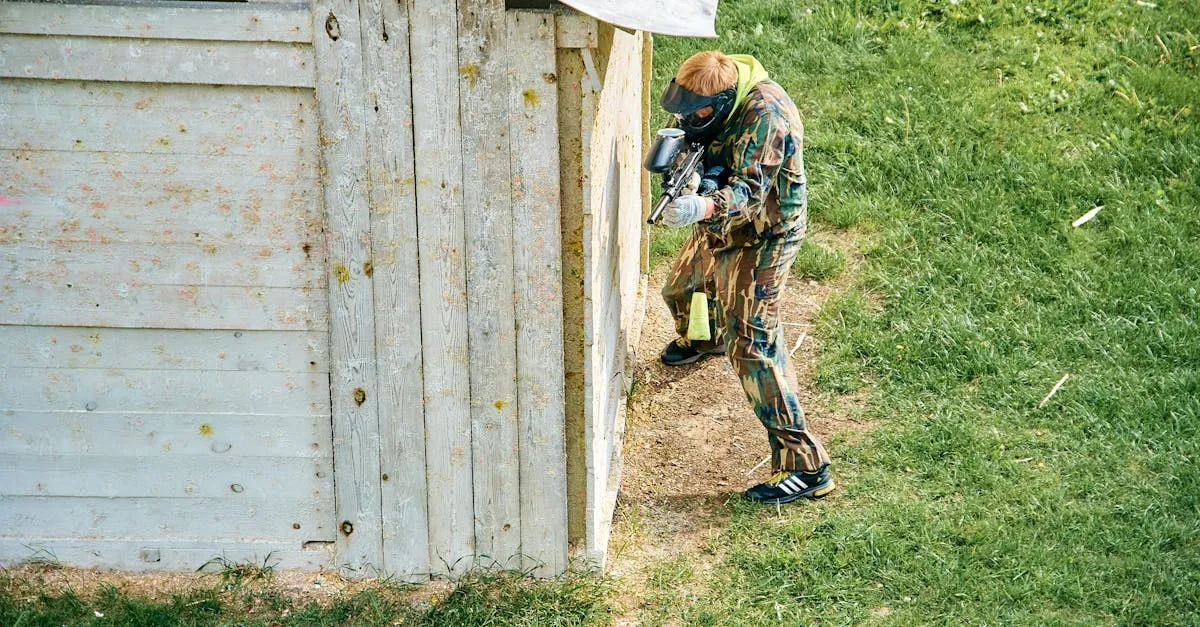
During this period, the sport was still played exclusively in the woods, a format now known as woodsball. Games were tactical, slow, and deliberate. Players wore camouflage, moved through natural terrain, and relied on patience as much as marksmanship. The different types of paintball games that exist today were still years away from being developed.
The Equipment Revolution of the Late 1980s
The early Nel-Spot pistols were pump-action, held about ten rounds, and had to be re-cocked between each shot. They were slow and clumsy by modern standards. But as paintball’s popularity surged through the mid-1980s, manufacturers saw an opportunity.
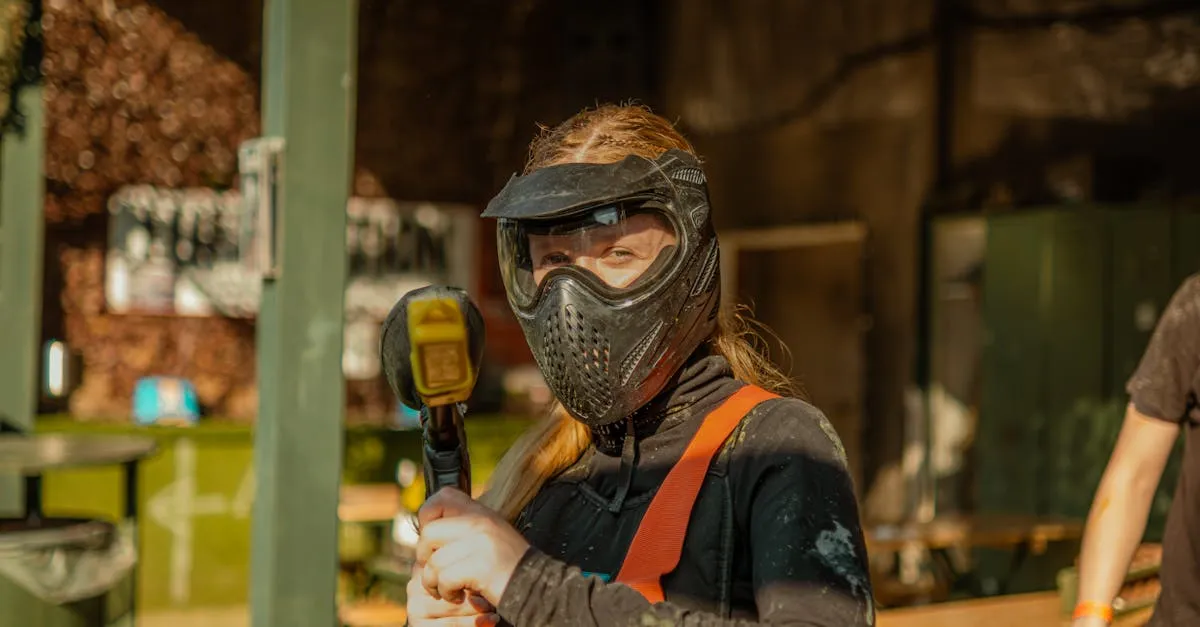
New companies entered the market with purpose-built paintball markers. Semi-automatic markers arrived in the late 1980s, dramatically changing the pace of play. Hoppers grew larger, barrels became more accurate, and protective gear evolved from simple shop goggles to full-face masks designed specifically for the sport.
This equipment revolution did more than improve the player experience. It fundamentally changed how the game was played. Faster markers meant faster games, which meant fields could be smaller and action could be more intense. The stage was being set for an entirely new style of play.
The Rise of Speedball in the 1990s
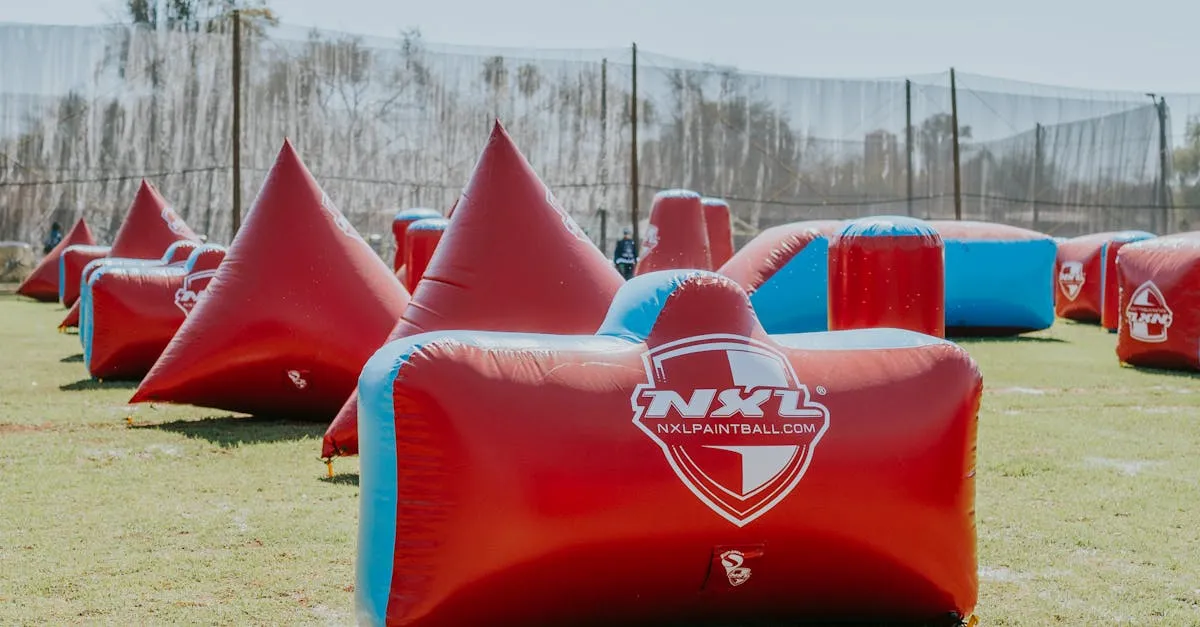
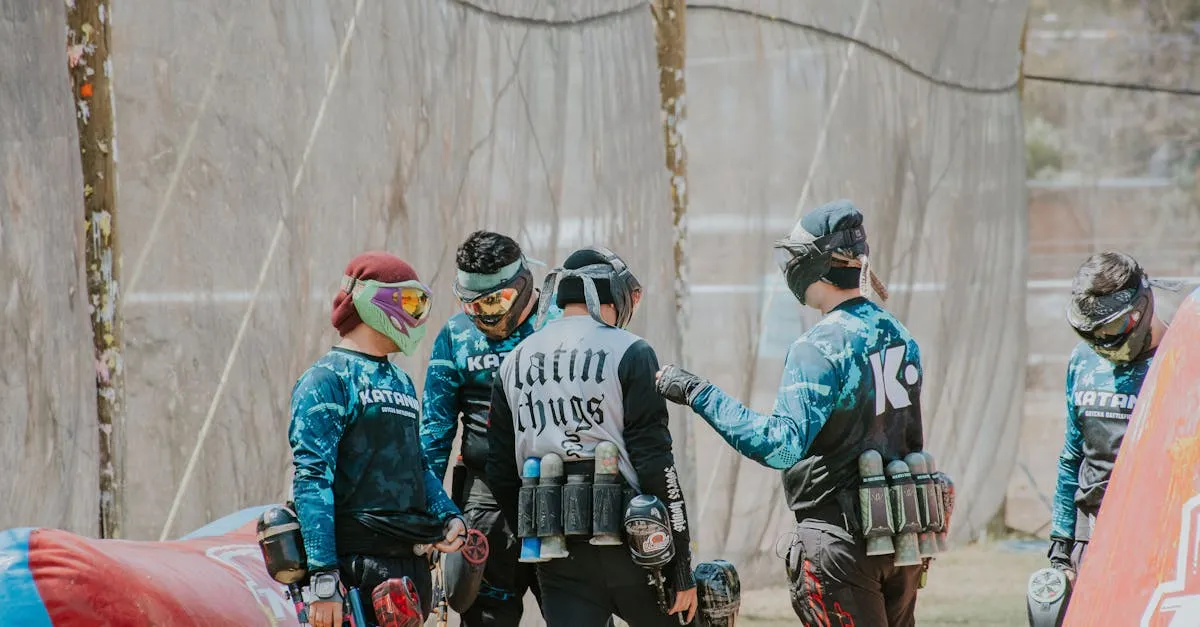
The 1990s brought the single biggest shift in paintball’s identity: the rise of speedball. Unlike woodsball, which took place in forests and natural terrain, speedball was played on flat, open fields filled with artificial bunkers, specifically inflatable obstacles arranged in symmetrical layouts.
Speedball games were short, intense, and spectator-friendly. Teams of five or seven players faced off in timed matches where communication, coordinated movement, and sheer speed mattered more than camouflage or patience. The format attracted a younger, more athletic crowd and gave paintball a competitive structure that was easier to broadcast and follow.
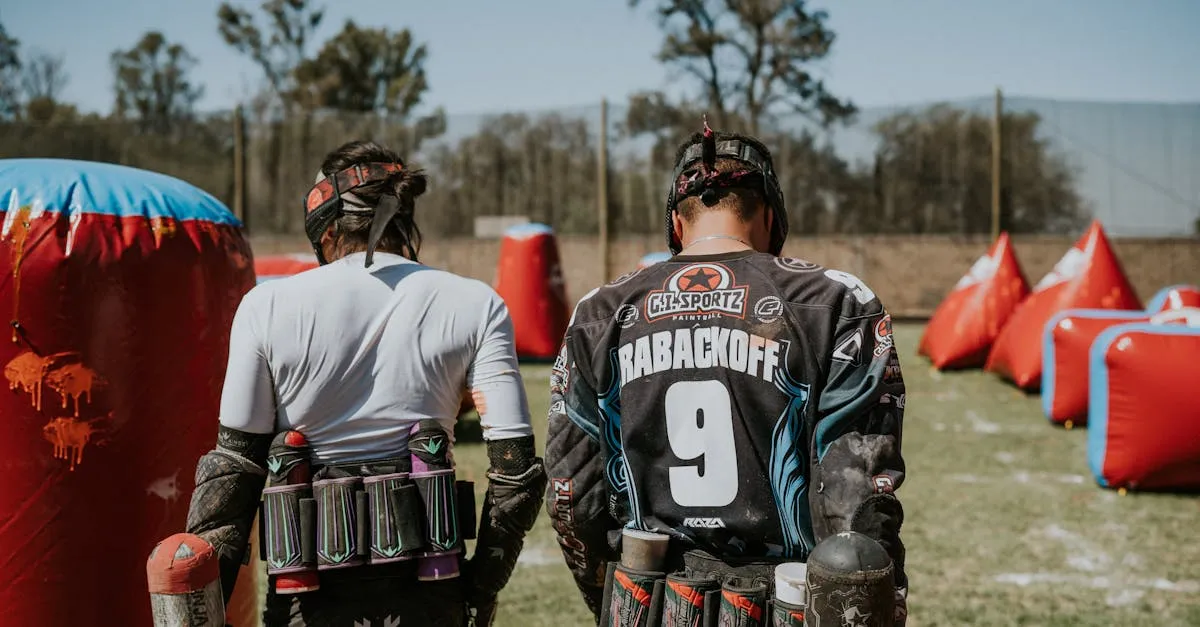
Tournament series began to professionalize. The NPPL (National Professional Paintball League) emerged as a major organizing body, bringing structure, sponsorships, and media coverage to the competitive scene. Famous paintball players began to emerge, athletes who trained seriously, represented sponsored teams, and developed followings within the community.
Scenario and Woodsball Hold Their Ground
Even as speedball dominated the competitive side of the sport, woodsball and scenario paintball continued to thrive at the recreational level. Large-scale scenario events like Oklahoma D-Day and Skirmish’s Invasion of Normandy drew thousands of players for multi-day events that blended paintball with military simulation. The sport was broad enough to support both cultures.
The Tournament Era and Professional Leagues
The 2000s saw paintball’s competitive infrastructure reach its peak. Multiple professional and semi-professional leagues operated simultaneously, and top teams competed for significant prize pools. The PSP (Paintball Sports Promotions) and the NPPL ran parallel national circuits, each promoting slightly different rule sets and formats.
The arrival of the NXL (National Xball League) format in the early 2000s pushed competitive paintball further toward a traditional sports model. Xball borrowed concepts from hockey and basketball: timed periods, multiple points per match, and penalty boxes. It was designed to be television-ready, and for a brief period, paintball appeared on networks and streaming platforms.
Equipment continued to advance. Electronic markers with programmable firing modes became standard at the competitive level. Paintballs themselves improved in quality and consistency. The gap between recreational and professional gear widened, mirroring trends in other equipment-intensive sports.
Professional paintball leagues consolidated over time. The NXL eventually became the dominant competitive organization, absorbing elements of earlier leagues and establishing itself as the premier circuit for tournament paintball worldwide.
The Modern Era: 2010s to Today
The 2010s brought both challenges and evolution. The sport experienced a contraction in participation compared to its mid-2000s peak, which led many to ask whether paintball was dying. Fields closed, some manufacturers went under, and the industry contracted.
But paintball did not disappear. It adapted. The sport found stability in a few key areas. Recreational play remained strong, with paintball consistently ranking among the most popular outdoor group activities for corporate events, birthday parties, and bachelor outings. Walk-on play at local fields continued to introduce new players to the sport every weekend.
The Influence of Social Media and Content Creation
YouTube, Instagram, and TikTok gave paintball a new kind of visibility. Content creators built large audiences around gameplay footage, gear reviews, and event coverage. This grassroots media ecosystem replaced the magazine-driven coverage of earlier decades and brought paintball to audiences who might never have encountered it otherwise.
Mechanical Paintball and the Retro Revival
An interesting development in recent years has been the resurgence of mechanical markers and pump play. Players who grew up during the electronic era began seeking a simpler, more skill-intensive experience. Pump tournaments and mechanical-only events have grown in popularity, creating a bridge between paintball’s roots and its present.
Where Paintball Stands Today
Today, paintball exists as a mature sport with a dedicated community. The NXL continues to run professional and amateur divisions. Local and regional leagues operate across North America, Europe, and Asia. Equipment is more reliable and accessible than ever, and rental gear at fields has improved dramatically, lowering the barrier to entry for newcomers ready to learn how to play paintball.
If you are new to the sport and want a concise primer before diving into the history, start with our overview of what paintball is. From twelve players in the New Hampshire woods to a global community of millions, paintball’s history is a story of invention, adaptation, and resilience. The sport has weathered booms and busts, format wars and league collapses, and it has emerged as something durable: a game that continues to evolve while staying true to the rush of competition that made those first players come back for more.