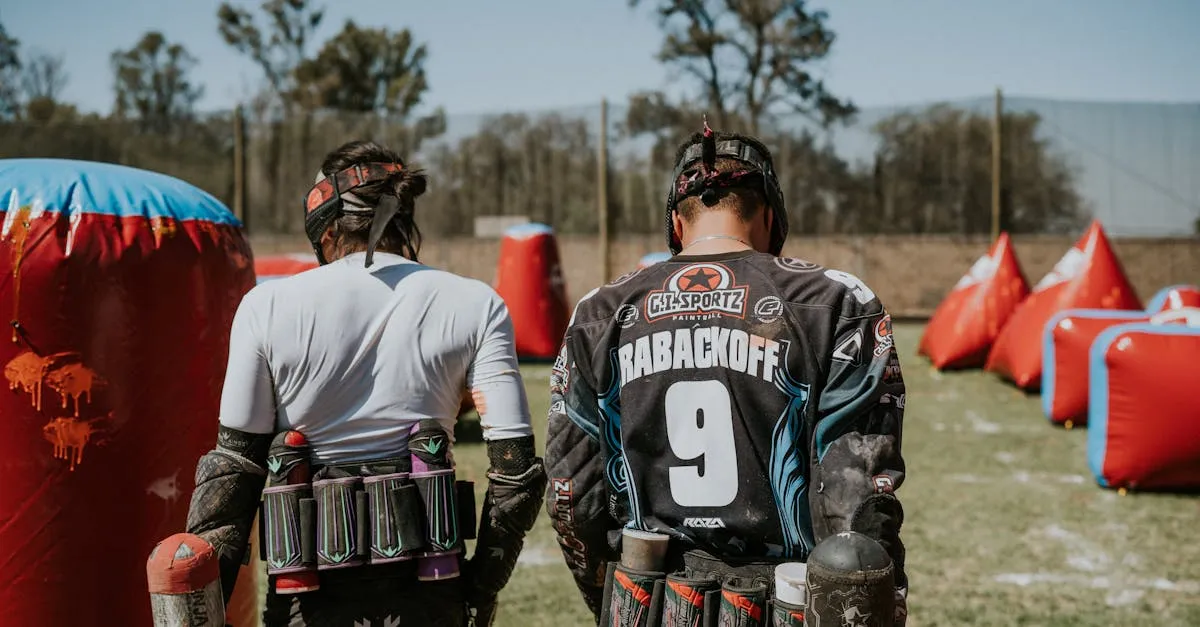
How long is a paintball game? A single paintball round lasts 5 to 15 minutes for most recreational play, with speedball points capped at 2 to 5 minutes and woodsball games running 10 to 20 minutes. A typical day at the field involves 4 to 6 hours of total time, with 2 to 4 hours of actual game time spread across multiple rounds and sessions. Scenario games can run from 4 hours to 24+ hours.
For game-format specifics, see types of paintball games, how to play speedball, and how to play woodsball.
Game Length by Format
| Format | Single Round | Notes |
|---|---|---|
| Speedball (recreational) | 5–10 minutes | Two teams, last-team-standing or capture flag |
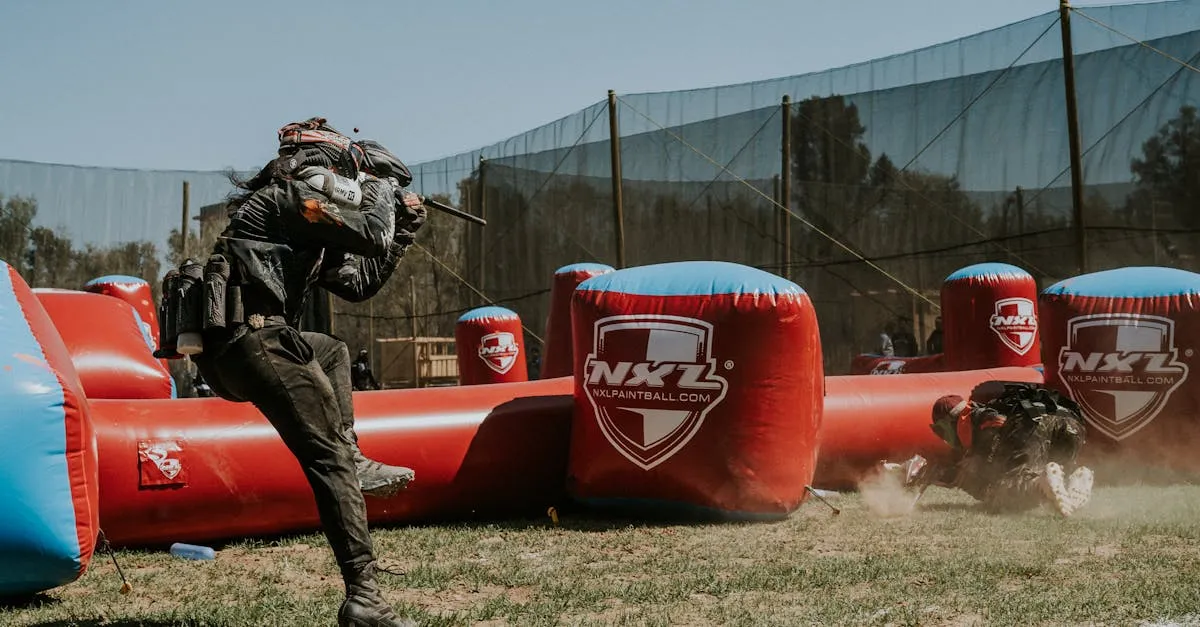
| Speedball (tournament) | 2–5 minutes | NXL points are capped at 5:00, often end faster |
| Woodsball | 10–20 minutes | Larger fields, slower pace |
| Scenario games | 4–24+ hours | Daylong or weekend events |
| Magfed | 10–20 minutes | Limited ammo paces the game |
| Pump | 10–20 minutes | Slower fire rate extends games |
| Indoor | 5–15 minutes | Tight spaces, fast resolution |
| Birthday/group party | 5–15 minutes | Field rotates groups quickly |
Why Game Lengths Vary
Three factors set how long a paintball game runs:
Field size. A 50-yard speedball field with 30 bunkers resolves in 5 minutes because both teams meet in the middle within seconds. A 5-acre woodsball field can run 20+ minutes because players spend more time moving and less time engaging.
Player count. A 5v5 speedball point ends fast because each elimination is a meaningful percentage of the team. A 50v50 scenario battle can run for hours because eliminations regenerate as players respawn.
Game objective. Elimination games end when one team is gone. Capture-the-flag and attack/defend games can end in seconds (someone grabs the flag fast) or stretch to time-cap (a stalemate). Tournament rules cap most game types to keep schedules moving.
A Typical Day at a Paintball Field
Most recreational paintball happens in 4 to 6 hour blocks. A typical Saturday at a public field looks like this:
- 0:00 to 0:30. Arrival, waiver, gear rental, safety briefing.
- 0:30 to 1:00. Field tour, basic instruction for new players.
- 1:00 to 1:30. First games (usually three or four short rounds, 5–10 min each, with 5-minute resets between).
- 1:30 to 2:00. Air refill, paint refill, water break.
- 2:00 to 3:30. Second session of games on a different field.
- 3:30 to 4:00. Lunch break.
- 4:00 to 5:30. Final games, often the most popular fields are saved for last.
- 5:30 to 6:00. Gear return, debrief.
A “half day” at most fields means the first 3-4 hours of this schedule. A “full day” means the whole 6 hours. Tournaments and scenario events run longer.
Speedball Tournament Game Length
NXL and other tournament-format speedball points are strictly timed:
- Race-to format. Teams play a series of points to a target score (e.g., race-to-7). Each point caps at 4–5 minutes. A best-of-7 match runs 25–35 minutes total including dead-time between points.
- Time-cap. If a point hits the cap with no flag hang, the team with the flag in their hand wins. Stalemates end at the cap.
- Halftime. Tournament matches typically have a 1–2 minute halftime break for water and strategy.
Speedball spectators usually watch a single match in 30–45 minutes including warmup and turnover.
Scenario Game Lengths
Scenario games are the longest format in paintball and can run from a single day to a full weekend:
- Big games (one-day). 4–8 hours of continuous play, usually with 50–200 players per side and a structured storyline.
- Weekend scenarios. Friday night through Sunday afternoon, with breaks for meals and sleep. Major events like Oklahoma D-Day historically ran for 3 days.
- 24-hour scenarios. Continuous play with rotating squads, food and respawn at base camp.
Scenario players carry significantly more paint, water, and gear than recreational players because the game does not stop for resupply.
Birthday Parties and Group Events
Most paintball fields offer birthday and group packages with a fixed time block:
| Package | Typical Length | Games Played |
|---|---|---|
| 1-hour mini-party | 60 minutes | 4–6 short games |
| 2-hour standard party | 120 minutes | 8–12 games |
| Half-day session | 4 hours | 15–20 games |
| Full-day session | 6 hours | 25–30+ games |
For party-specific guidance, see paintball party and paintball bachelor party.
How Often Are You Actually Playing?
A 4-hour visit at a paintball field includes maybe 90–120 minutes of actual game time. The rest is gear changes, breaks, refills, and rotations between fields. Plan accordingly:
- You shoot ~500 paintballs per hour of active play at a recreational pace, or 1,500+ per hour for tournament speedball.
- You walk ~2 miles of cumulative movement during a 4-hour session.
- You drink 24–48 ounces of water per hour of active play. See paintball fitness.
Paintball Game Length FAQ
How many paintball games can I play in a day?
A typical 4-hour recreational session includes 15–20 games. A full 6-hour day can run 25–30 games depending on field rotation and group size. Tournament players play fewer total games because matches are longer and more deliberate.
How long is a tournament paintball point?
NXL and most tournament speedball points cap at 4–5 minutes. Most points end before the cap because of fast eliminations. A best-of-7 match runs 25–35 minutes including breaks between points.
How long does a paintball birthday party last?
Standard paintball birthday parties run 90 minutes to 3 hours, with most fields offering a 2-hour package as the default. The package usually includes 8 to 12 short games plus rental gear and a paint allotment. See paintball party for planning details.
How long is a scenario paintball game?
Scenario games run from a few hours to multiple days. One-day big games typically last 4 to 8 hours. Weekend scenarios run Friday through Sunday with breaks for meals. The longest scenarios, like 24-hour events, run continuously with rotating squads.
Why are some paintball games shorter than others?
Game length depends on field size, player count, and the game objective. Small fields with even teams resolve in minutes because eliminations happen fast. Large fields with many players take longer because players spread out and engagements are less frequent. Tournament rules cap most formats to keep schedules predictable.