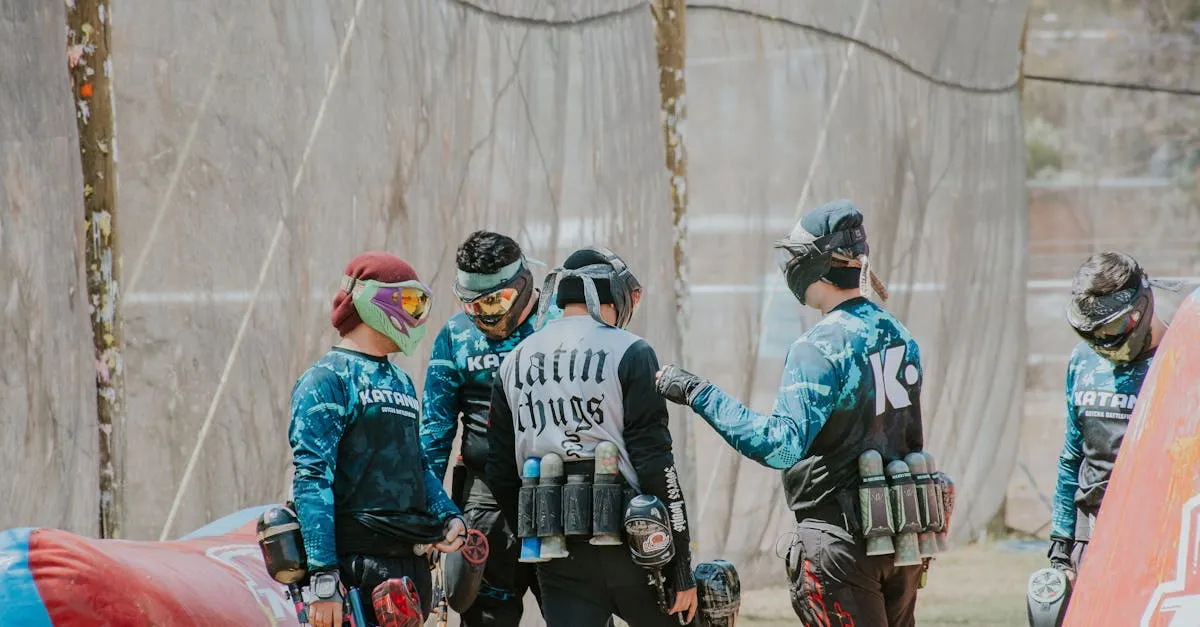
Is paintball dying? Paintball is not dying. US participation sits at roughly 2.67 million players as of 2023, up from the 2021 pandemic low, and the global paintball equipment market is projected to grow from $223 million in 2023 to $403 million by 2033 at a 6.1% annual rate. The sport has changed significantly since its mid-2000s peak, when regular participation topped 5 million players. Casual walk-on numbers dipped hard, while competitive leagues, scenario events, and magfed formats are growing. Field quality has improved even as the total number of facilities has shifted.
Paintball by the Numbers
| Metric | Peak / Then | 2023–2026 | Direction |
|---|---|---|---|
| US regular participants | ~5 million (2006) | 2.67 million (2023) | Down from peak, up from 2021 low |
| US wholesale gear sales | Peak 2007 | ~$140 million (2023) | Down roughly 54% from peak |
| Global paintball equipment market | N/A | $223 million (2023) | Growing at 6.1% projected CAGR through 2033 |
| US paintball field businesses | Peak around 2018 | 1,721 businesses (2023) | Slight year-over-year growth |
| NXL World Cup teams | 300+ (2015) | 500+ (2024) | Up roughly 67% |
Sources: SFIA and Outdoor Foundation participation data, Fact.MR equipment market report, IBISWorld field business census, Major League Paintball NXL event data.
What Happened During and After COVID
The pandemic hit paintball hard. Fields shut down for months, leagues canceled entire seasons, and manufacturers slowed production. For a sport that depends on people physically gathering outdoors, extended lockdowns were devastating. Several well-known fields that had been operating for decades closed permanently during 2020 and 2021, unable to survive months without revenue.
But something unexpected happened during the recovery. As restrictions lifted, outdoor recreation surged across the board, and paintball was part of that wave. Fields that survived the shutdown reported strong booking numbers through 2022 and into 2023, particularly for walk-on play and birthday parties. People who had been cooped up indoors were looking for active, social experiences, and paintball fit the bill perfectly. It also happens to be a genuine workout, as our guide to paintball fitness explains. The sport didn’t bounce back to its mid-2000s peak, but it stabilized in a way that surprised a lot of people who had written it off.
Field Closures and the Changing Landscape
Field closures are often cited as the strongest evidence that paintball is in decline. IBISWorld counts roughly 1,721 paintball field businesses in the United States as of 2023, with the count having peaked around 2018 and then contracting during the pandemic before recovering slightly. Some regions have lost their only local field, making it harder for new players to find paintball fields near them. Rising land costs, insurance premiums, and zoning challenges have made it increasingly difficult to operate a paintball facility on thin margins.
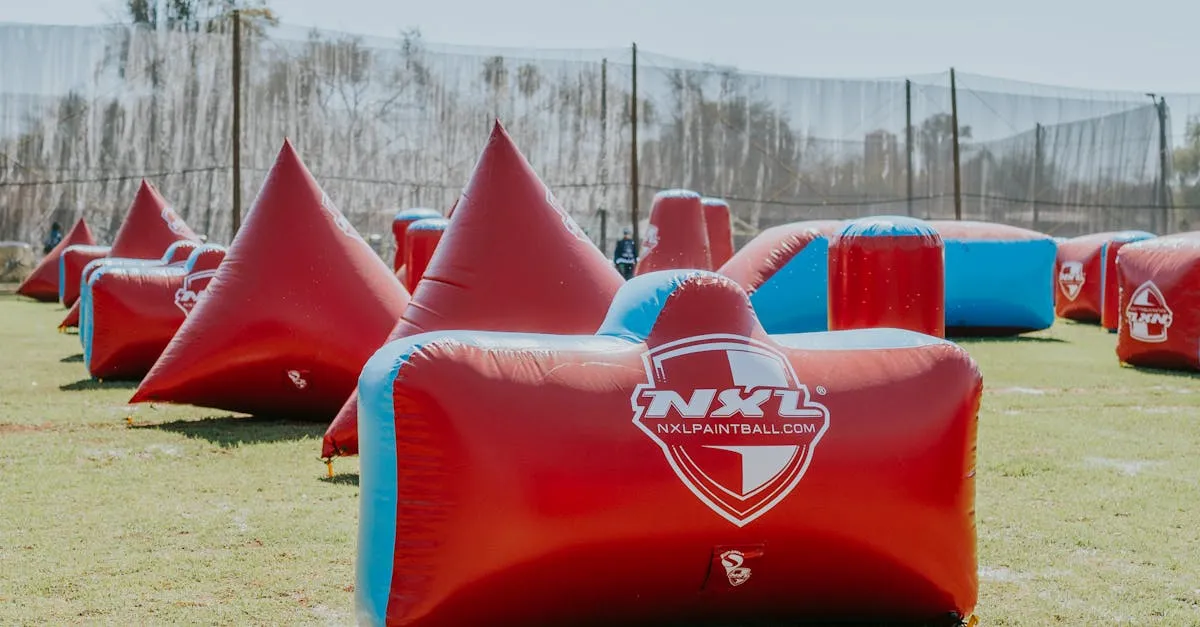
However, the picture isn’t entirely bleak. New fields have opened in areas where demand exists, and many established fields have invested in upgrades (better netting, improved staging areas, new game formats) to attract and retain players. The fields that have survived tend to be better run and more customer-focused than the average field from the early 2000s. Quality has improved even as quantity has shifted.
Indoor facilities have also carved out a niche, offering climate-controlled play that isn’t dependent on weather or daylight. These venues often cater to corporate events, youth groups, and casual players who want a convenient, predictable experience.
Competitive Paintball Is Growing
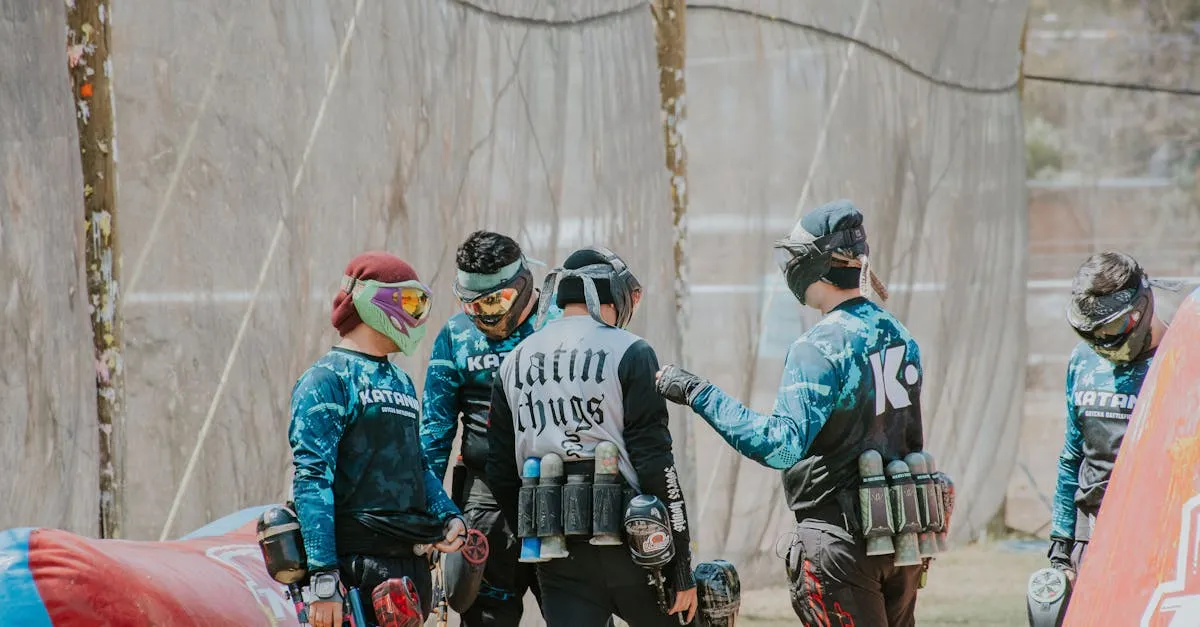
One of the strongest counterarguments to the “paintball is dying” narrative is the state of competitive play. The NXL (National Xball League) has expanded steadily, now running four major US events plus an annual World Cup, with 15+ divisions spanning professional, semi-pro, amateur, and youth play. US majors average more than 230 teams each, and World Cup draws 500+ teams globally, up from roughly 300 at the 2015 event: a 67% increase over a decade. Regional leagues that feed into the NXL have grown as well, giving more teams a structured path from local competition to major tournaments on the national stage.
Tournament paintball viewership has also increased, thanks in large part to improved live-streaming production. NXL events are now broadcast with professional commentary, multiple camera angles, and real-time stats. The presentation has become polished enough to attract viewers who don’t play the sport themselves. For a deeper look at how competitive paintball developed, check out the history of paintball, our guide to professional paintball leagues, and our ranking of the most famous paintball players who shaped the competitive era.
Magfed, Scenario, and the Casual Renaissance
While speedball and tournament play get the most attention online, some of the most interesting growth in paintball is happening in formats that don’t make the highlight reels. Magfed paintball, where players use magazine-fed markers that mimic the look and handling of real firearms, has built a dedicated and expanding community. The limited ammo capacity forces a more tactical, deliberate style of play that appeals to players who find traditional hopper-fed paintball too chaotic or ammo-heavy.
Scenario games and big events continue to draw large crowds. Multi-day events built around storylines, objectives, and themed gameplay attract hundreds or thousands of players at a time. Skirmish USA’s Invasion of Normandy event in Pennsylvania regularly draws 4,000+ players and is now the largest continuing scenario event in the country. The long-running Oklahoma D-Day, which averaged around 4,000 players per year since its founding in 1997, closed after a final event in October 2025: a symbolic end of an era, though the community’s energy has largely migrated to other flagship scenarios rather than disappearing.
This diversification of play styles is one of paintball’s greatest strengths right now. The sport isn’t relying on a single format to sustain itself. Whether someone wants high-speed tournament action, tactical milsim scenarios, or a casual afternoon with friends, there’s a version of paintball that fits. Our guide to the types of paintball games breaks down the major formats and what makes each one different.
Youth Leagues and Growing the Next Generation
Youth paintball programs have expanded in several regions, with some areas now offering structured leagues for players as young as ten. These programs introduce kids to the sport in a controlled, coached environment that emphasizes safety, teamwork, and sportsmanship. For parents who might be hesitant, organized youth leagues provide a level of structure and oversight that open play days don’t always offer.
High school and college paintball clubs have also become more common, giving younger players a social framework and competitive outlet. These programs are critical for the sport’s long-term health because they create players who grow up with paintball as part of their identity, not just something they tried once at a birthday party.
Who Plays Paintball Today?
Paintball attracts players across a wider age range than its tournament-focused reputation suggests. Competitive NXL and speedball rosters skew toward teens and twenty-somethings, where reflexes and cardio define the top of the game. Scenario and magfed events lean older, with many committed players ranging from their late twenties into their forties and fifties. Youth leagues accept players as young as ten in many regions, and corporate and bachelor-party groups drive a large share of casual walk-on play across all age brackets.
Geographically, paintball is strongest in the Southeast, Midwest, and Mid-Atlantic, where land for outdoor fields is abundant and year-round playable weather extends the season. Texas, Florida, California, Pennsylvania, and New York each host dozens of commercial fields. Gender-wise, the sport is still predominantly male, though women’s teams and mixed rosters have grown in both competitive and scenario play over the past decade.
The Challenges Paintball Faces
Being honest about the sport’s future means acknowledging real challenges. Cost remains the biggest barrier to entry. Between field fees, paint, air fills, and gear, a day of paintball adds up quickly compared to many other recreational activities. For new players renting equipment and buying paint at field prices, a single outing can easily cost $60 to $100 per person. That’s a tough sell for casual players, especially younger ones.
Competition from alternative activities is another factor. The global airsoft market was valued at roughly $1.93 billion in 2022 and is projected to reach $3.5 billion by 2030, growing at 7.8% annually: an order of magnitude larger than the paintball equipment market and growing faster. Airsoft offers a similar tactical experience at a lower per-session cost since reusable BBs replace expensive paint. For a detailed comparison, see our breakdown of paintball vs airsoft. Laser tag and gel blasters have also entered the space as lower-impact, lower-cost options that appeal to younger players and those who want a less intense experience. We cover the differences in our paintball vs gel blasters guide.
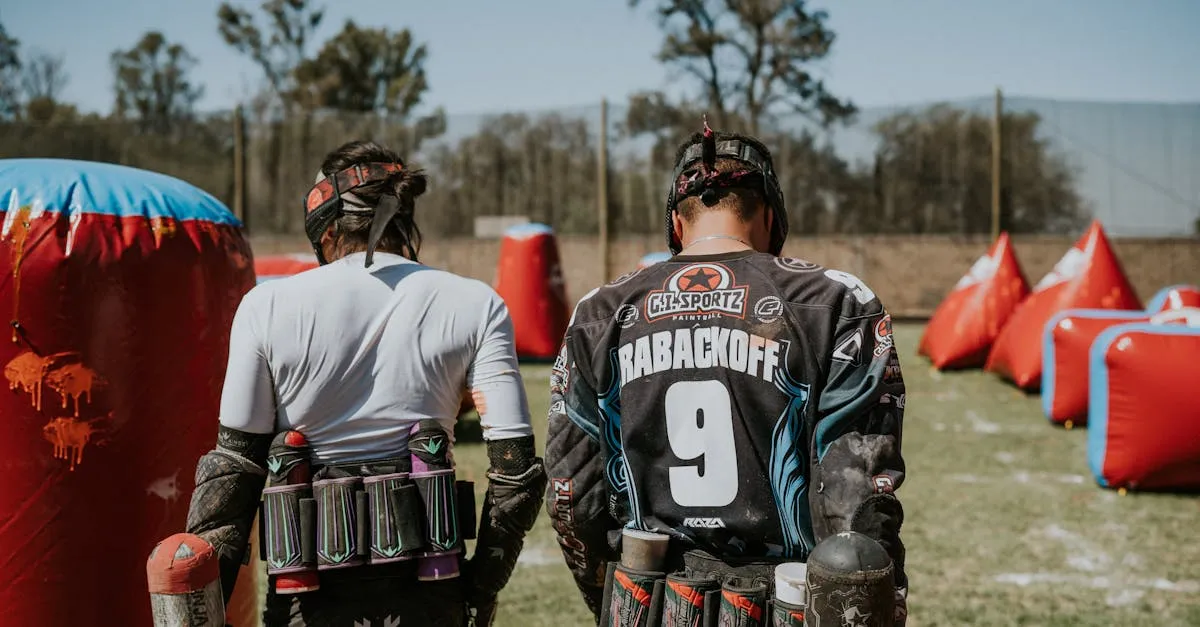
The paintball industry has also consolidated sharply since 2020. Kore Outdoor now owns six of the sport’s most established brands under one parent company: G.I. Sportz, Tippmann, Empire, JT, Spyder, and VForce. Kore emerged from the 2020 G.I. Sportz bankruptcy and was acquired by Ironbridge Equity Partners in August 2022. Consolidation has stabilized the supply side but has left fewer independent manufacturers than the sport had at its peak.
Longtime players also point to structural issues in competitive paintball itself. The pro 5-man format has looked similar since 2003, with coaching, timed halves, and penalty boxes stripped out of broadcasts over the years. First-person gameplay is genuinely hard to film in a way that conveys strategy to non-players, which has limited mainstream TV and streaming breakthroughs despite strong highlight-reel content. These are real constraints on the competitive side’s mainstream appeal, but they are constraints on growth, not signs of collapse.
The Social Media Effect
Social media has been a double-edged sword for paintball. On one hand, platforms like YouTube, Instagram, and TikTok have given the sport more visibility than it has ever had. First-person gameplay videos, trick shots, and event highlights regularly pull in millions of views. Content creators have built large audiences around paintball, introducing the sport to people who might never have encountered it otherwise.
On the other hand, social media amplifies the “is paintball dying” conversation itself. Every field closure gets discussed at length, every slow weekend gets treated as a sign of the apocalypse, and negativity tends to generate more engagement than positive stories. The perception of decline can become self-fulfilling if it discourages new players from trying the sport or convinces existing players to stop showing up.
The net effect, though, has been positive. More people are aware of paintball now than at any point in the sport’s history, even if participation numbers haven’t returned to their peak. Awareness is the first step toward participation, and the content pipeline shows no signs of slowing down.
Where Paintball Goes From Here
Paintball in 2026 is not the same sport it was in 2005, and that’s not entirely a bad thing. The player base is smaller but more engaged. Fields are fewer but better operated. Competitive play is more organized and more visible than ever. New formats like magfed have opened doors to players who wouldn’t have been interested in traditional paintball.
The sport faces real headwinds (cost, competition, and an aging core demographic among them) but it also has genuine momentum in areas that matter. Youth development, content creation, competitive structure, and format diversity all point toward a sport that is evolving rather than dying.
Paintball isn’t going anywhere. It’s changing shape, and for players willing to adapt with it, there’s plenty to be excited about.
Is the paintball industry dying?
No. The global paintball equipment market was valued at $223 million in 2023 and is projected to reach $403 million by 2033, growing at a 6.1% annual rate according to Fact.MR. US participation has also recovered from its 2021 pandemic low, sitting at 2.67 million players in 2023. The industry has consolidated (Kore Outdoor now owns G.I. Sportz, Tippmann, Empire, JT, Spyder, and VForce), and wholesale equipment sales are well below the 2007 peak, but active production, field businesses, and competitive play all point to a sport that is shrinking from its peak rather than disappearing.
How many people still play paintball?
Roughly 2.67 million Americans played paintball at least once in 2023, according to Outdoor Foundation and SFIA participation data. That is down from a mid-2000s peak near 5 million regular participants and an estimated 10 million annual players when counting anyone who tried the sport once per year, but it is up from the 2021 pandemic trough and has been trending modestly upward since.
Why did paintball lose popularity since the 2000s peak?
Three factors drove the decline. First, cost: paintball is expensive per session, and the 2008 recession hit discretionary spending on gear hard. Second, competition from lower-cost tactical alternatives: airsoft grew into a market roughly ten times larger than paintball equipment, and laser tag and gel blasters picked up casual players. Third, structural issues in the pro tournament format and the difficulty of filming paintball in a way mainstream audiences could follow limited TV and streaming growth during a decade when mainstream sports coverage exploded. The sport is adapting through format diversification and improved live streaming, but it has not returned to mid-2000s highs.
How old is the average paintball player?
There is no single average age because paintball’s formats each attract different demographics. Competitive NXL and speedball rosters skew toward teens and twenty-somethings, where reflexes dominate. Scenario and magfed events lean older, with core players in their thirties and forties. Youth leagues accept players as young as ten, and rec play draws a broad cross-section including corporate groups, bachelor and birthday parties, and weekend-warrior groups of all ages.
Is paintball growing or declining in 2026?
The answer depends on which part of the sport. Global equipment sales are growing at a projected 6.1% annual rate. US participation is recovering from the 2021 low. NXL World Cup team counts rose roughly 67% from 2015 to 2024. On the other side, US wholesale gear sales remain well below the 2007 peak, some long-running scenario events have closed (Oklahoma D-Day held its final event in October 2025), and the casual walk-on player base is smaller than it was fifteen years ago. The fair summary: paintball is stable-to-growing in competitive and scenario formats, recovering in casual participation, and consolidated on the manufacturing side.