What are the rules of paintball? The most important rule in paintball is to keep your mask on at all times on the field. Beyond mask safety, core rules include calling yourself out when hit with a visible paint mark, obeying the field’s velocity limit (typically 280-300 fps), and never shooting at eliminated players.
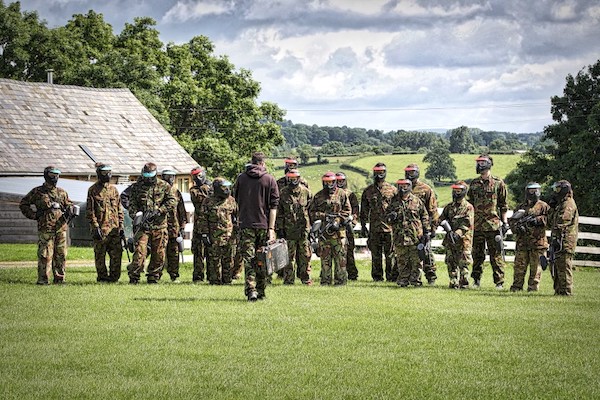
Whether you are playing your first game or your fiftieth, the rules stay largely the same across fields and formats. Here is a breakdown of everything you need to know.
Safety Rules
Safety rules are non-negotiable. Every commercial field enforces them, and recreational groups should too. Violating safety rules will get you removed from the field immediately at most venues.
Mask Rules
Your mask stays on at all times while you are on or near the playing field. This is the single most important rule in paintball. Paintballs travel at roughly 280 feet per second, and a direct hit to an unprotected eye can cause permanent blindness.
- Never lift, remove, or adjust your mask while on the field, even if it fogs up. Call yourself out and walk to the staging area before touching your mask.
- Masks must be ASTM-rated paintball masks. Ski goggles, shop safety glasses, and airsoft goggles do not meet the standard.
- If you see another player remove their mask on the field, stop shooting and yell “blind man” to halt play.
Barrel Blocking Devices
When you are off the field, your marker must have a barrel sock or barrel plug installed. A barrel sock is a fabric cover that catches any accidental discharge. Most fields require barrel socks specifically because they are more reliable than rigid barrel plugs, which can pop out.
Velocity Limits
Most fields set a maximum muzzle velocity of 280 feet per second (fps). Some indoor or close-quarters fields cap it at 250 fps. Before each session, you will chronograph your marker to confirm it falls within the limit. If your marker shoots hot, you need to adjust it before playing. Shooting above the field’s velocity cap is a serious infraction and can result in ejection.
Minimum Engagement Distance
Many fields enforce a minimum engagement distance of 10 to 15 feet, especially for different game types played in close quarters. If an opponent is too close, you call them out by saying “surrender” or “barrel tag” instead of shooting them point-blank. Not every field uses this rule, so confirm it during the safety briefing.
Gameplay Rules
The specifics vary depending on the type of game you are playing, but certain gameplay rules apply almost universally.
Eliminations
A player is eliminated when a paintball hits them and breaks, leaving a visible paint mark. The mark can be anywhere on the body, clothing, gear, or marker. A hit counts regardless of where it lands.
- Splatter does not count. If paint sprays onto you from a nearby hit on a bunker or the ground, you are not out.
- Paintballs that bounce off you without breaking do not count as eliminations.
- If you are unsure whether you were hit, call a paint check. A referee will inspect the mark and make the call.
Calling Yourself Out
When you are hit, immediately signal it. Raise your marker above your head, shout “hit” or “out,” and walk off the field with your marker raised. Do not continue shooting after being hit. Do not wipe the paint off and keep playing. Both of those actions carry penalties.
Dead Man Walking
Once you are eliminated, you are a dead player. Walk directly to the designated dead zone or staging area. Do not communicate with active teammates by calling out enemy positions, pointing, or giving hand signals. Dead players sharing information is a form of cheating.
Boundaries
Every field has defined boundaries. Going out of bounds eliminates you from the game. Pay attention during the field walk and safety briefing so you know exactly where the limits are.
Common Penalties
Referees enforce rules and assign penalties. The severity depends on the violation and whether it appears intentional.
Wiping
Wiping means secretly removing a paint mark to avoid being called out. If a referee catches you wiping, you will be pulled from the game. In tournaments, wiping penalties can affect your entire team, often resulting in additional players being eliminated alongside the offender.
Playing On
Playing on means continuing to shoot or advance after being hit. If it is genuinely accidental, a referee might just pull you out. If it looks deliberate, you and sometimes an additional teammate may be penalized.
Overshooting
Shooting a player excessively after they have already called themselves out is known as overshooting or bunkering (depending on context). A few extra balls in the heat of the moment are generally understood, but deliberately unloading on a player who is clearly out is unsportsmanlike and can get you sat out for multiple games.
Blind Firing
Blind firing means sticking your marker around or over a bunker and shooting without looking. You cannot aim, which means you cannot control where your paint goes. Most fields prohibit it because it creates safety risks, particularly the chance of hitting someone at dangerously close range or shooting outside the field boundaries.
Equipment Violations
Using a marker that exceeds the velocity limit, using paint not purchased at the field (at fields with field-paint-only policies), or modifying equipment to gain an unfair advantage can all result in penalties ranging from a warning to a permanent ban.
Field Etiquette
Rules cover what you must and must not do. Etiquette covers what makes you a good player to share a field with.
- Call your hits honestly. No game is worth cheating over. If you feel a ball break on you, call yourself out.
- Do not overshoot new players. If someone is clearly inexperienced, one or two hits is enough to get the point across.
- Respect the refs. Their calls are final. Arguing on the field slows the game down for everyone.
- Keep your rate of fire reasonable in recreational games. Full-auto or ramping against rental players wearing rental gear turns people away from the sport.
What Happens at the Safety Briefing
Before your first game at any field, you will attend a mandatory safety briefing. The referee or field marshal will cover mask rules, barrel sock requirements, the field’s specific velocity limit, boundaries, game formats, surrender rules, and how to signal a hit. Listen carefully even if you have played before, because rules vary from field to field.
If you want a broader overview of how a typical day of paintball works from start to finish, check out our guide on how to play paintball.
Are the Rules Enough to Keep You Safe?
The short answer is yes, provided everyone follows them. Paintball has a strong safety record compared to many other recreational sports. The rules around masks, velocity limits, and barrel blocking devices specifically address the most common injury risks. For a deeper look at injury statistics and how to minimize risk, read our article on whether paintball is safe.
The rules of paintball are straightforward. Wear your mask, follow the velocity limits, call your hits, and respect other players. Every other rule flows from those basics. Know them, follow them, and you will have a better time on the field.