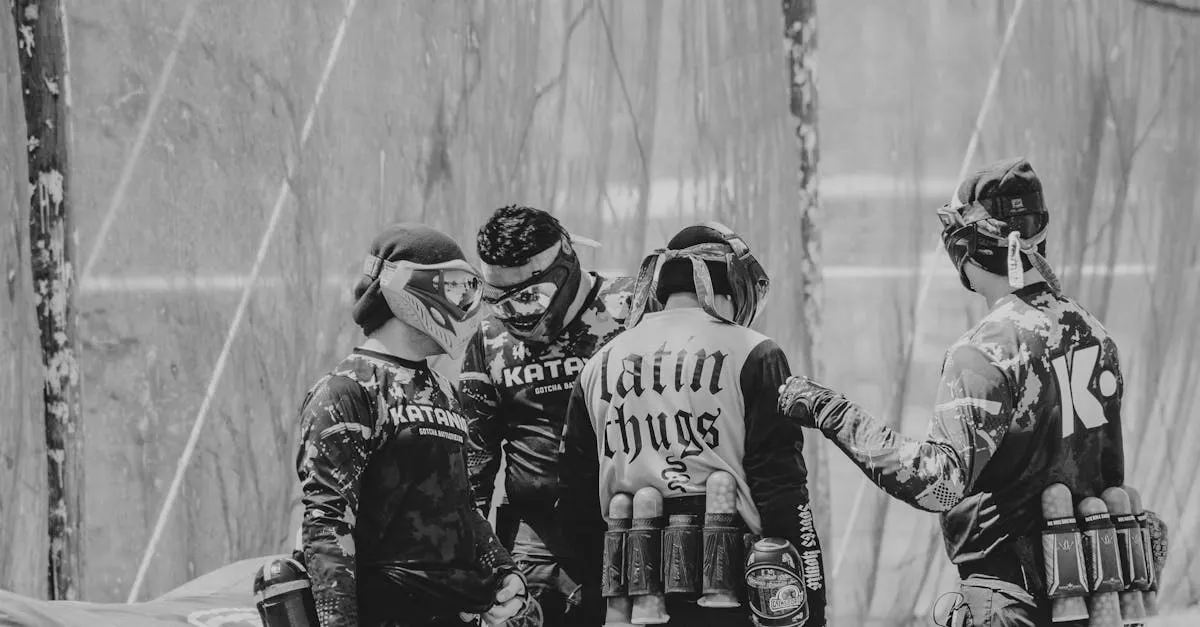
What should you wear to play paintball? Wear long sleeves, full-length pants, sturdy closed-toe shoes, and a moisture-wicking base layer. Layered clothing reduces sting, prevents bruises, and keeps you comfortable all day. The breakdown below covers every layer from head to toe so you show up prepared.
| Body Area | What to Wear | Why |
|---|---|---|
| Head | Baseball cap or beanie under mask | Protects back of head from hits |
| Face and eyes | Paintball mask with thermal lens | Required safety gear, prevents fogging |
| Neck | Gaiter or high-collar shirt | One of the most painful spots to get hit |
| Upper body | Moisture-wicking base + loose long-sleeve shirt | Two layers absorb impact, wick sweat |
| Hands | Tactical or mechanics gloves | Knuckle hits sting, gloves keep trigger feel |
| Lower body | Cargo pants or thick joggers over compression tights | Durable, full coverage, easy to move in |
| Feet | Hiking boots, cleats, or trail runners with thick socks | Ankle support and traction on uneven terrain |
Base Layer and Upper Body
Wear a long-sleeved shirt as your starting layer. A moisture-wicking athletic shirt works well underneath because it pulls sweat away from your skin. Over that, add a loose-fitting long-sleeve cotton or polyester shirt. The extra fabric absorbs some of the paintball’s impact energy before it reaches your body.
Avoid tank tops, short sleeves, or anything tight-fitting. Exposed skin means more pain on direct hits, and tight clothing transfers the full force of each shot. If you want to know exactly how much a hit stings, read our breakdown on does paintball hurt.
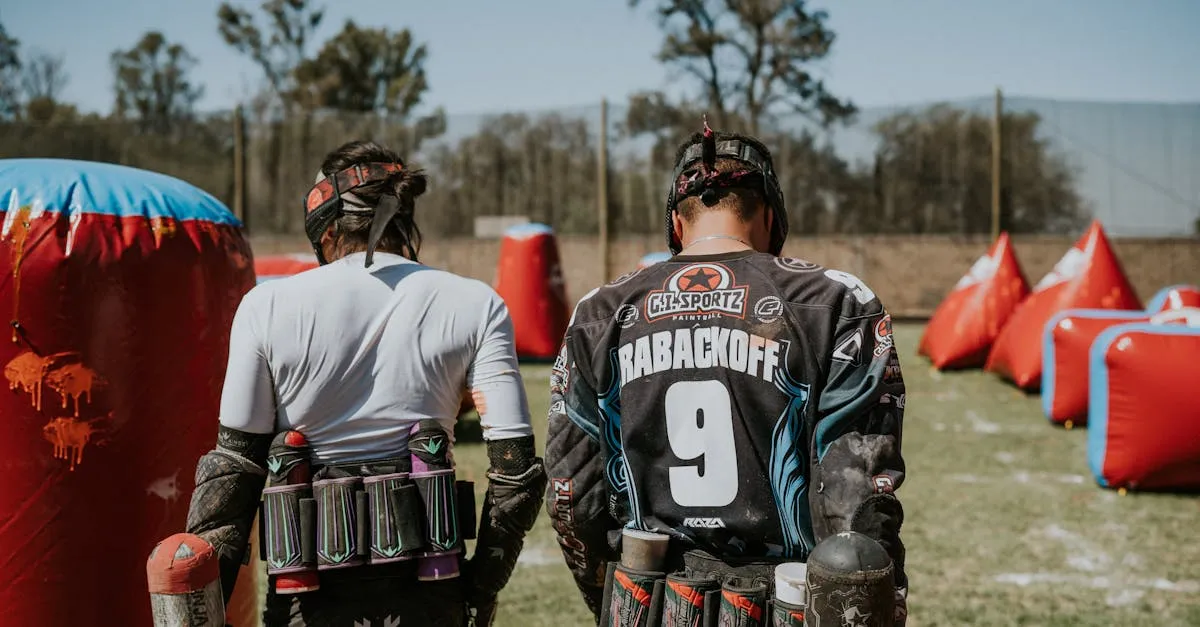
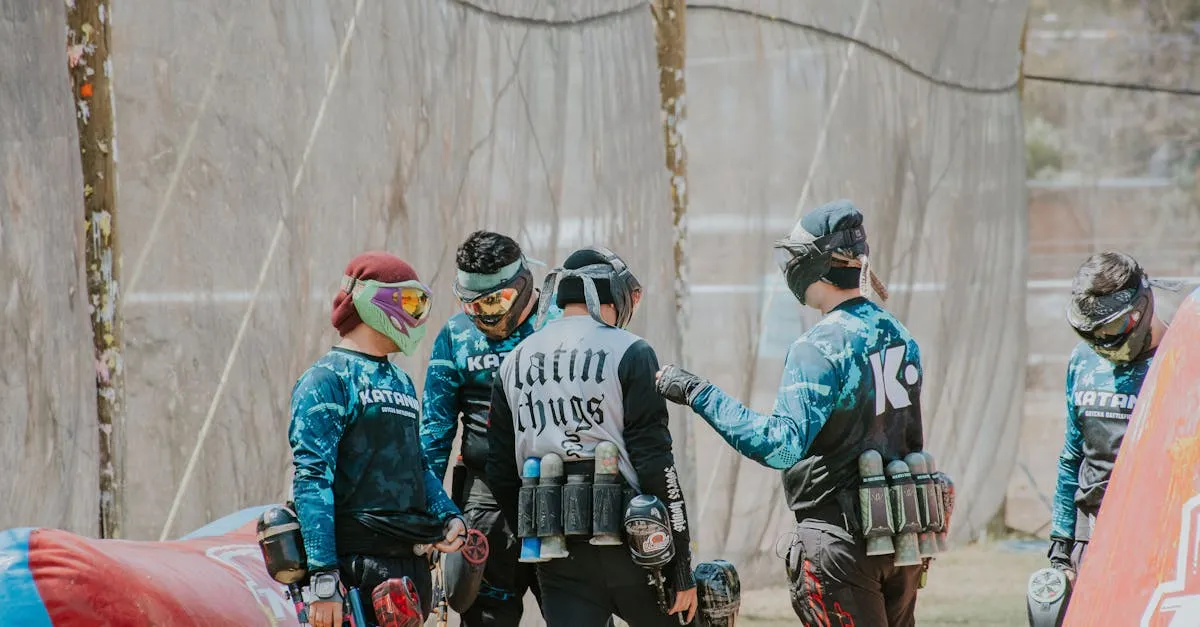
Dark colors and camouflage patterns both work. Dark clothing hides paint stains better and makes you harder to spot in wooded fields. Bright colors are fine for speedball arenas where concealment does not matter. If you play competitively, a dedicated paintball jersey offers built-in padding and a better fit than layered street clothes.
What to Avoid on Top
- Hoodies with drawstrings that can snag on bunkers
- Anything you care about keeping clean
- Bulky jackets that restrict arm movement
Pants and Lower Body
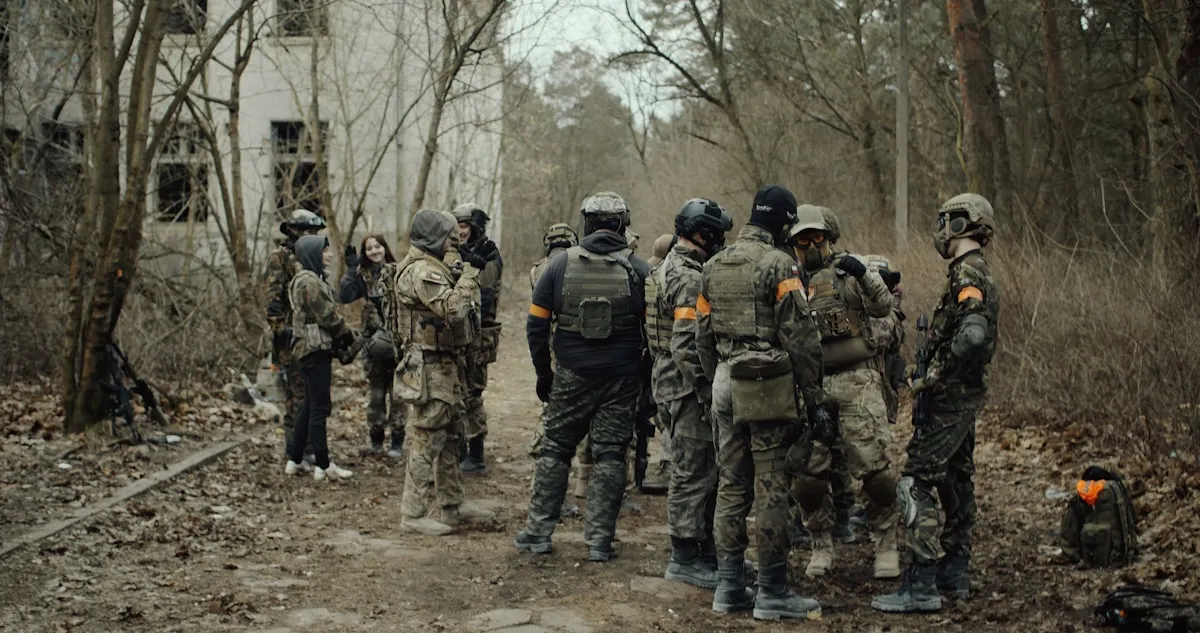
Cargo pants are the standard recommendation for good reason. They are durable, offer decent padding on the thighs, and the pockets are useful for carrying squeegees or pods. Jeans work in a pinch but restrict movement when you need to crouch, slide, or sprint.
Athletic joggers with a thicker fabric are another solid option. They allow full range of motion and are easy to wash afterward.
Never wear shorts. Your thighs and knees will take hits, and without fabric coverage, every shot leaves a welt. Knee-length or longer is the minimum.
Layering the Lower Body
On cold days or if you bruise easily, wear compression pants or leggings under your outer pants. This adds a second layer of impact absorption without adding bulk. The same principle applies here as with your upper body: more loose fabric between your skin and the paintball means less sting.
Footwear
Your shoes matter more than most beginners realize. Paintball fields include uneven terrain, mud, tree roots, and artificial turf depending on the venue. You need footwear that grips well and supports your ankles.
Best options:
- Hiking boots or tactical boots – Ankle support, rugged soles, and water resistance make these the top choice for woodsball. Mid-height boots hit the sweet spot between protection and mobility.
- Cleats – Soccer or football cleats are ideal for grass and mud. They provide aggressive traction when you need to push off quickly. Most fields allow them unless the playing surface is artificial turf.
- Trail running shoes – Lighter than boots, with enough tread for most field conditions. Good for speedball where agility matters more than ankle protection.
Avoid: sandals, canvas sneakers, flat-soled shoes, or anything open-toed. Fields will turn you away at the door if your footwear is unsafe. For specific recommendations, check out our guide to the best shoes for paintball.
Wear thick socks regardless of your shoe choice. They prevent blisters during extended play and add a small buffer if a paintball catches your ankle.
Head and Face Protection
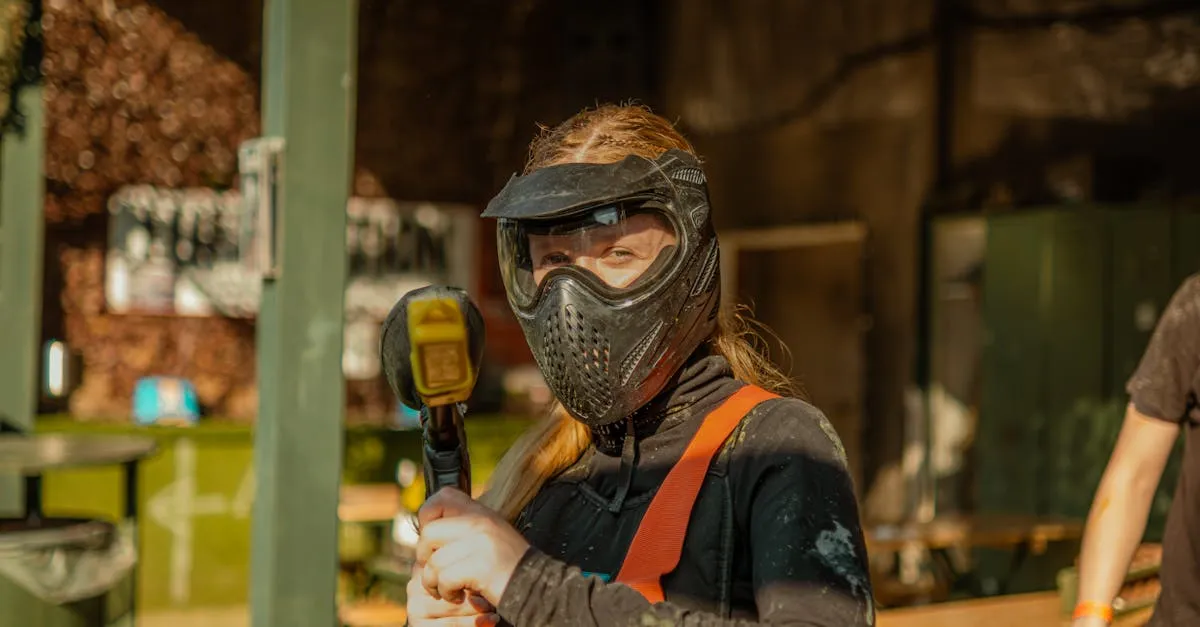
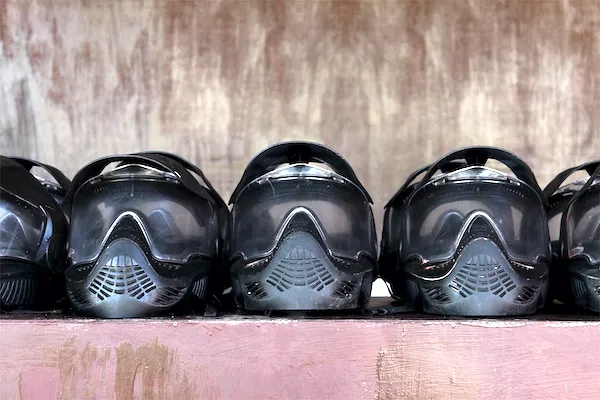
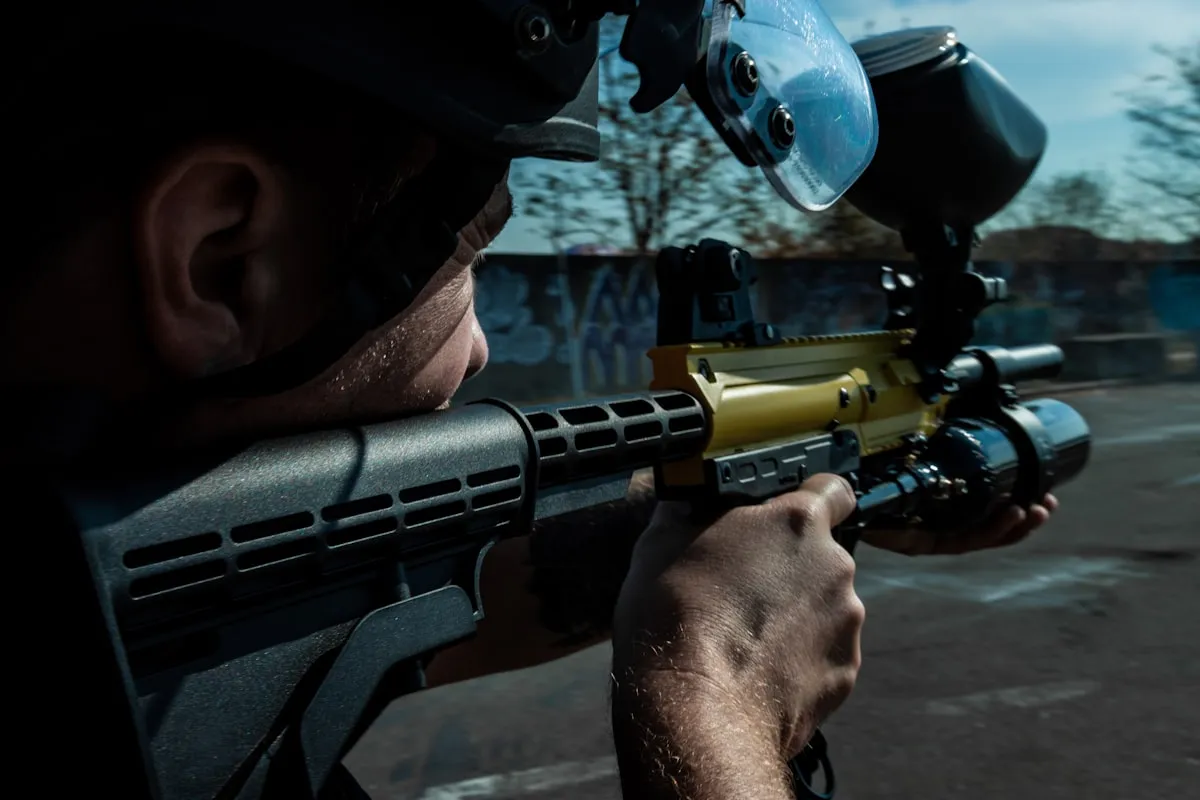
A paintball mask is the single most important piece of gear you will wear. Every field requires one, and you should never remove it during active play. A quality mask protects your eyes, ears, mouth, and forehead from direct impacts traveling at 280 feet per second.
Rental masks from the field work but tend to fog up quickly, fit poorly, and limit your peripheral vision. If you plan to play more than once or twice, investing in your own mask pays for itself fast, and knowing how to clean a paintball mask will keep it fog-free for years. Check our guide on the best paintball masks for specific recommendations.
Key features to look for:
- Thermal or dual-pane lens – Resists fogging far better than single-pane lenses
- Full ear coverage – Getting hit in the ear without protection is one of the most painful experiences in paintball
- Comfortable foam padding – You will wear it for hours; comfort matters
A baseball cap worn backward under your mask protects the back of your head from shots. A beanie works for the same purpose in cold weather and adds warmth.
Gloves
Your hands are exposed constantly – when holding your marker, gripping bunkers, or bracing a fall. A paintball hit to bare knuckles at close range is sharp and memorable.
Lightweight tactical gloves or mechanics gloves are the go-to choice. They protect your fingers and the back of your hand while maintaining enough dexterity to operate your marker’s trigger, safety, and loader. Bulky winter gloves kill your trigger control, so keep them thin.
We cover specific options in our best paintball gloves guide.
Padding and Extra Protection
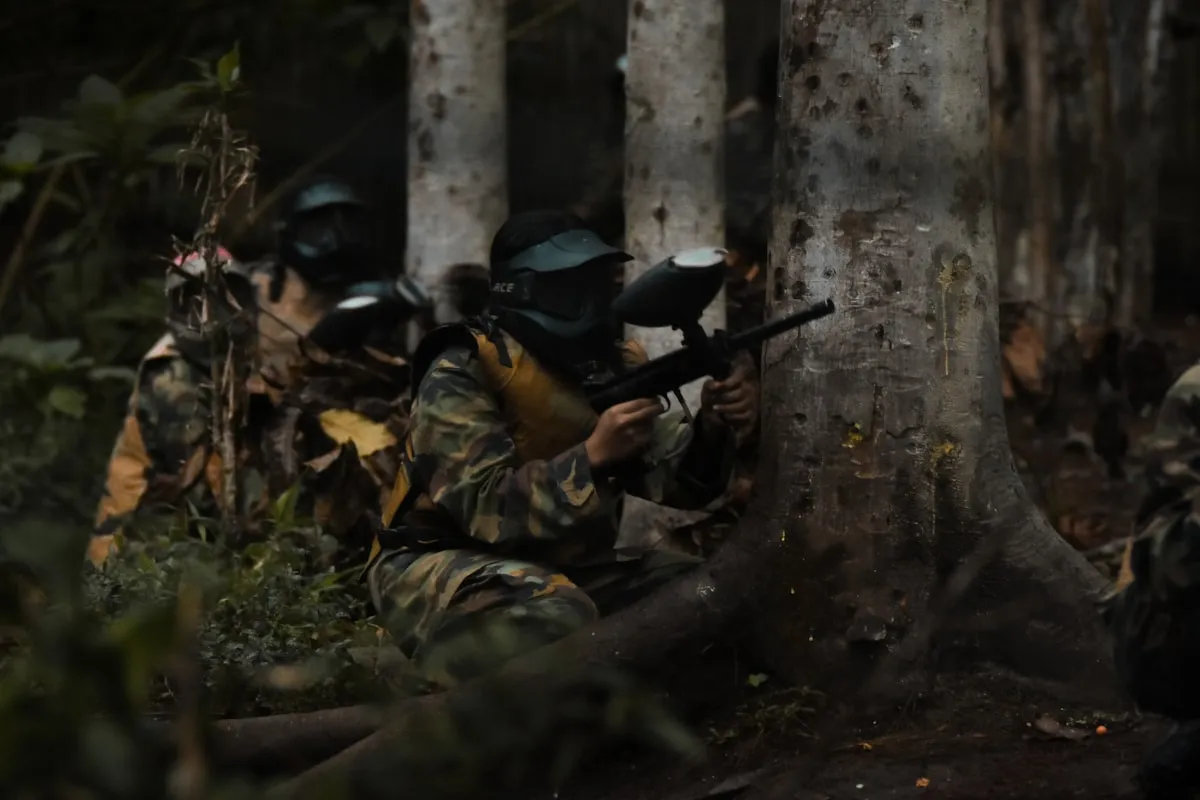
Beyond clothing, a few additional items reduce the punishment your body takes:
- Neck protector – A simple neoprene collar or a shemagh wrapped around your neck covers one of the most sensitive areas on your body
- Chest protector or padded vest – Useful for younger players, anyone who bruises easily, or if you play in cold weather when impacts hurt more
- Elbow and knee pads – Sliding into cover, kneeling behind bunkers, and diving all take a toll on your joints. Volleyball-style knee pads or purpose-built paintball pads work equally well
- Cup or athletic supporter – Strongly recommended for male players. Enough said.
Dressing for Weather
Paintball is an outdoor sport in most cases, so adjust your kit to the conditions.
Hot Weather
Stick to a single long-sleeved layer in lightweight, breathable fabric. Drink water constantly. Light-colored clothing reflects heat better than dark gear. Accept that you will sweat and plan for it with moisture-wicking base layers.
Cold Weather
Layer up with a thermal base layer, a mid-layer for insulation, and your outer paintball clothing on top. Bring hand warmers for your pockets between games. A balaclava under your mask keeps your face warm without interfering with the seal.
Rain
Wear a lightweight rain jacket over your top layers. Waterproof pants or rain pants over your regular bottoms keep you functional when the field turns to mud. Bring a spare set of dry clothes for after play.
Quick Gear Checklist
Here is what to pack for a day of paintball:
- Long-sleeved shirt (two layers in cold weather)
- Cargo pants or thick joggers
- Boots, cleats, or trail runners with thick socks
- Paintball mask (or plan to rent one)
- Gloves
- Neck protection
- Knee pads (optional but recommended)
- Change of clothes for the drive home
If you are heading out for your first game, pair this guide with our walkthrough on how to play paintball to learn the rules and basic tactics. You can also check how much does paintball cost to budget for your day out.